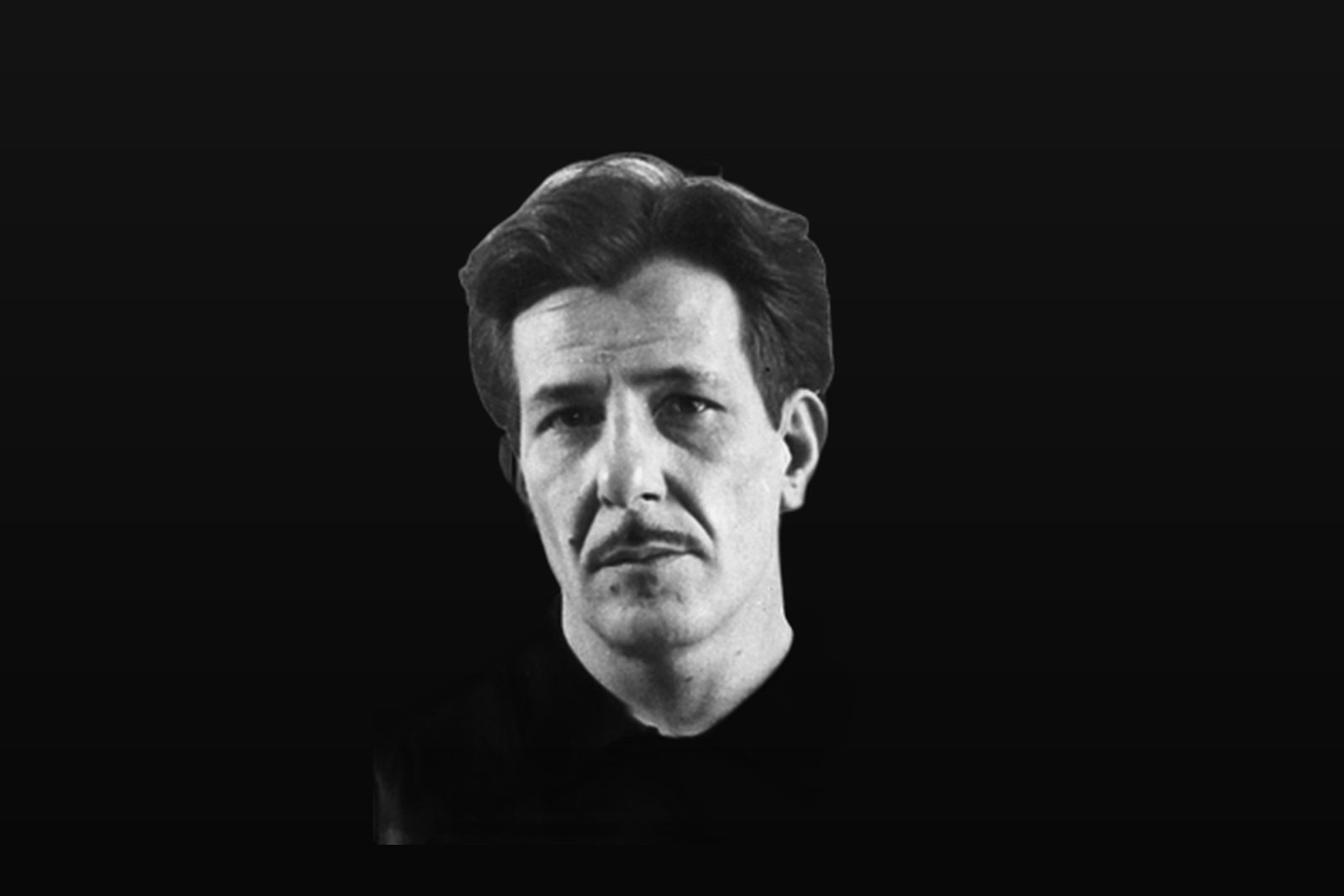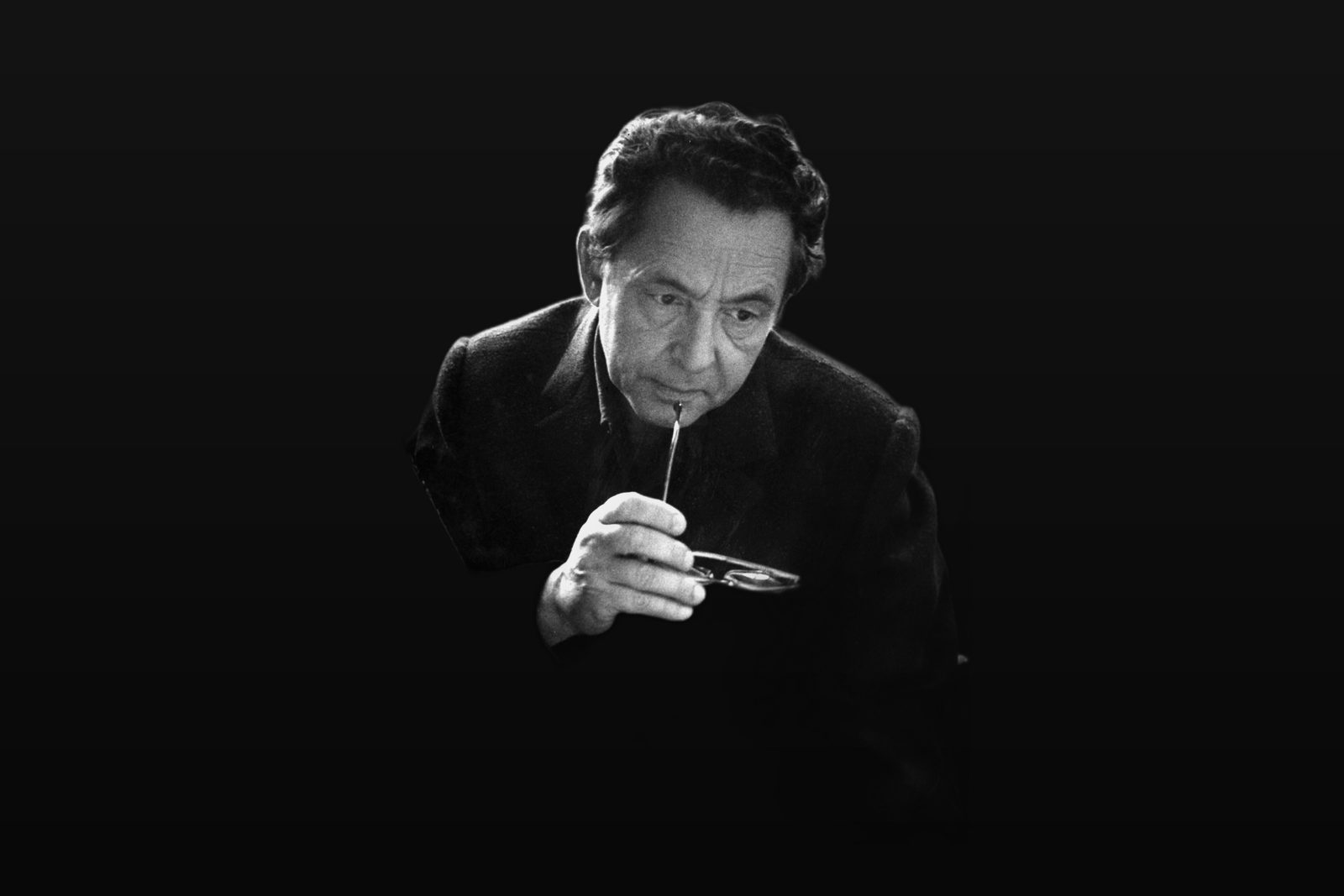
There are books that change the way you see the world, and then there is “Ways of Seeing”. John Berger’s book, published in 1972, did not simply change how I see art. It changed how I see, full stop. How I look at a face, a landscape, an advert in the metro, a painting in a museum. It taught me that the gaze is never innocent, that it is always constructed, conditioned, directed by forces we do not perceive until someone shows them to us. Berger was the one who showed.
I read it for the first time at twenty, in a dog-eared paperback bought from a second-hand bookshop. The reproductions were poor, the paper yellowing, and yet every page struck me with the force of something self-evident. What Berger was saying was so simple, so clear, that you wondered how no one had said it before. But that is the nature of great ideas. They seem obvious only after they have been articulated.
The central argument of “Ways of Seeing” rests on a few propositions. First, the mechanical reproduction of images has fundamentally transformed our relationship with works of art. A painting that was once unique, tied to a specific place, a church, a palace, a collection, has become, since the invention of photography and even more so colour printing, one image among others: infinitely reproducible, decontextualised, available everywhere and nowhere at once. Berger draws on Walter Benjamin here, naturally, but he goes further, as explored in Duchamp at MoMA.. Where Benjamin spoke of the loss of the aura, Berger speaks of the transformation of meaning. It is not merely that the work loses something in reproduction, it is that reproduction creates a new meaning, often contrary to the original’s.
Take an example he develops beautifully. A Vermeer hanging in a museum says something about light, about interiority, about domestic life in seventeenth-century Holland. The same painting reproduced in an art book with a caption indicating its auction price says something else entirely. It now speaks of market value, of cultural prestige, of ownership. The painting is the same. The gaze has changed. And it is context, not the work, that determines what we see.
This idea accompanies me every day in the studio. When I work on a canvas, I know it will exist in multiple contexts. On the studio wall first, in that northern light I know by heart. Then photographed for social media, reduced to a luminous square on a phone screen, seen between an advert and someone’s lunch photo. Then hung perhaps in a gallery, under considered lighting, with a label, a price, a discourse. The work is the same. But what people see changes with each translation. Berger taught me not to be naive about this, to understand that context is not a neutral frame but an active force that alters perception.
The second major axis of “Ways of Seeing” concerns the gendered gaze. Berger devotes an entire chapter to the way the European pictorial tradition constructed woman as an object of sight. The female nudes from the Renaissance through the nineteenth century, he shows, are not celebrations of the body but stagings of power. The painted woman looks at the viewer, that is to say, the owner of the painting, that is to say, a man, as explored in painting beyond photography.. She is nude not because she undresses but because she is seen. Nudity, in this tradition, is not a state of the body but a spectacle offered to a possessing gaze.
“Men look at women. Women watch themselves being looked at.” This sentence, perhaps the most famous in the book, continues to resonate with troubling accuracy. Not only in art, but in advertising, cinema, social media, everywhere images of female bodies are produced and consumed. Berger was writing in 1972 and was describing, without knowing it, the world of Instagram.
For an artist working today, this analysis is not a theoretical luxury. It is a working tool. When I paint, I am conscious of the tradition I belong to and the one I refuse. Black and white, among other things, is a way of short-circuiting certain mechanisms Berger describes. Colour, in Western painting, has often served seduction, illusion, spectacle. The pink of flesh, the blue of sky, the gold of divine light, all of it participates in a language that seeks to please, to imitate, to make you forget you are looking at a painted surface. Black and white refuse that seduction. They force the gaze to focus on what remains when you strip away the charm of colour: structure, gesture, contrast, light in its most essential form.
Berger knew this, he who was also a draughtsman. His line drawings, his sketches of animals and landscapes, his quick portraits share that same radical economy. No colour, no seduction, just the line and what it captures of the real in an instant.
The third pillar of “Ways of Seeing” is perhaps the most political. Berger shows how European oil painting, from the fifteenth to the nineteenth century, functioned as an instrument for legitimising property. Still lifes celebrate possessed objects. Portraits affirm social status. Landscapes depict land that belongs to someone. Art, in this reading, is not detached from the material world. It is its most refined, most effective, most insidious expression, because it clothes possession in the attributes of beauty and eternity.
This analysis might seem Marxist and reductive, and some have judged it so. But Berger does not say that all painting reduces to a question of property. He says that the Western pictorial tradition developed a visual language whose principal functions included the representation and legitimisation of possession. Recognising this function does not diminish the beauty of a Vermeer or a Chardin. It enriches our understanding of what we see and of why we see it as we do.
What strikes me, more than fifty years after its publication, is how operational “Ways of Seeing” remains. Berger did not have the internet, social media, or artificial intelligence generating images by the billion. And yet his analytical tools still work. Perhaps better than ever. Because we live in a world saturated with images, a world where the gaze is solicited ceaselessly, diverted, manipulated, and where the capacity to truly see, that is, to understand what one sees and why one sees it, has become a form of resistance.
When I am in the studio, facing a canvas in progress, I often think of Berger. Not of his theories, not of his arguments, but of that quality of attention he brought to things. He looked at a Caravaggio the way he looked at the face of an Alpine peasant, with the same intensity, the same respect, the same will to understand what is at play in the space between the one who looks and what is looked at.
That is perhaps the most enduring lesson of “Ways of Seeing”: the gaze is an act. Not passive reception, not mechanical recording, but active engagement, a choice, a responsibility. Every time we lay our eyes on an image, we decide, consciously or not, what we are looking for. Berger asks us to make that choice knowingly.
For those who paint, this demand is twofold. It is not only a matter of looking well, but of producing images that invite a just gaze. Images that do not flatter, that do not seduce cheaply, that do not reproduce the power relations inscribed in tradition. Images that respect the viewer enough to make nothing easy.
I do not know whether I succeed. But I know that when I choose to work in black and white, when I choose radical contrast over nuance, when I choose the single irreversible gesture over the patient layering of coats, it is in part because I read Berger at twenty and something opened in my way of seeing that has never closed again.
John Berger died in January 2017, in Antony, in the Paris suburbs. He was ninety years old. He was still drawing. He was still looking. In one of his last texts, he wrote that drawing is a form of touch, that when you draw a tree, the hand follows the contours as if it were touching the bark. It is a magnificent idea, and a profoundly true one. Sight and touch are not two separate senses. They are two sides of the same gesture of attention to the world.
I think of this every morning when I pick up a brush. The black I lay on the canvas is not merely seen. It is touched, by my hand first, then by the gaze of whoever stops before it. Berger taught me that this gaze is never trivial, that it carries within it the entire history of the one who looks, and that the artist’s responsibility is to be conscious of this without being imprisoned by it.
“Ways of Seeing” can be read in two hours. It takes a lifetime to reread.