There are titles that say everything before you have even crossed the threshold. In Minor Keys. When Koyo Kouoh chose these three words to name the 61st Venice Biennale, she knew exactly what she was doing. She was not proposing a theme. She was proposing a way of listening. A manner of leaning in toward what the clamour of the art world usually drowns out: the low voices, the whispers, the frequencies no one amplifies because they do not fill auction rooms.
Koyo Kouoh will not see her exhibition. She died on 30 October 2024, taken by cancer at 57, a few months after being named director of the Biennale. The first African woman to lead the Venice Biennale in one hundred and thirty years of existence. That it took until 2026 for this to happen tells us everything about the slowness of institutions. That it was her, Cameroonian, founder of RAW Material Company in Dakar, director of the Zeitz MOCAA in Cape Town, tells us everything about what she had to endure to get there.
The curatorship carries on
The team she had assembled picked up the torch. The project remained intact, faithful to her vision. One hundred and eleven artists, the majority from the Global South, Africa, Southeast Asia, the Caribbean, Latin America. Names that Parisian collectors have not yet heard of, and that is precisely the point. In Minor Keys is not a Biennale of confirmation. It is a Biennale of revelation, in the photographic sense, that moment when the image slowly appears in the silver bath, and one discovers what had been there all along without anyone seeing it.
The title borrows from musicology. In music, a minor key is not sad, contrary to what the Western ear would have us believe. It is simply other. It says things differently. It introduces a tension, an ambiguity, a trembling within certainty. An A minor lacks nothing compared to an A major. It offers another reading of the same sonic material. Kouoh applied this logic to contemporary art: there are no minor voices, only voices we have chosen not to hear.
The national pavilions
France is sending Yto Barrada. It is a choice that makes sense, Barrada, born in Paris, raised in Tangier, has worked for twenty years at the border between document and fiction, between colonial archives and poetic gesture. Her counterfeit fossils, her improbable herbariums, her grainy films speak of a Mediterranean that refuses to be reduced to a single narrative. Germany entrusts its pavilion to Bruce Naumann and Sung Tieu, an unlikely pairing that blends American conceptual sound art with the post-migratory installations of an artist born in Vietnam and trained in Frankfurt. Australia presents Khaled Sabsabi, a Lebanese-Australian artist whose video and immersive work interrogates intersecting spiritualities.
But the true signal of this edition lies in the first-time participations. El Salvador, Ecuador and Morocco will each have their own national pavilion for the first time. Morocco in Venice. One must grasp what this means: a country from the Maghreb, with its art scene in full effervescence, from Casablanca to Marrakech, from the Rabat Biennale to the Jardin Majorelle residencies, finally gaining access to the Venetian stage. This is not cultural diplomacy. This is tectonics.
Painting in a minor key
There was a word Koyo Kouoh used often in her curatorial texts: between. Between categories, between disciplines, between dominant narratives and underground histories. It is in this in-between that the 2026 Biennale unfolds. Not in the thundering assertion of a manifesto, but in the grey zone, or rather the black and white zone, where certainties come undone.
To paint in a minor key is to accept that not everything needs to be said in brilliance. That the truest gesture is not always the broadest. That a single stroke of India ink on a white sheet holds as much tension as a three-metre panel saturated with colour. A minor key in painting is the choice of restraint, not out of timidity, but out of precision. It means painting what happens between the brushstrokes, in the space that the gesture allows to breathe. The silence between two notes.
Black and white are, by nature, minor keys. They do not shout. They do not seduce through chromatics. They demand a different labour from the eye: seeing values, contrasts, pauses for breath. When one paints in black on white or in white on black, one does not represent the world, one filters it, condenses it, reduces it to its skeleton. It is a gesture of quiet radicality. Minor. And perhaps that is why it touches so deeply.
Venice as mirror
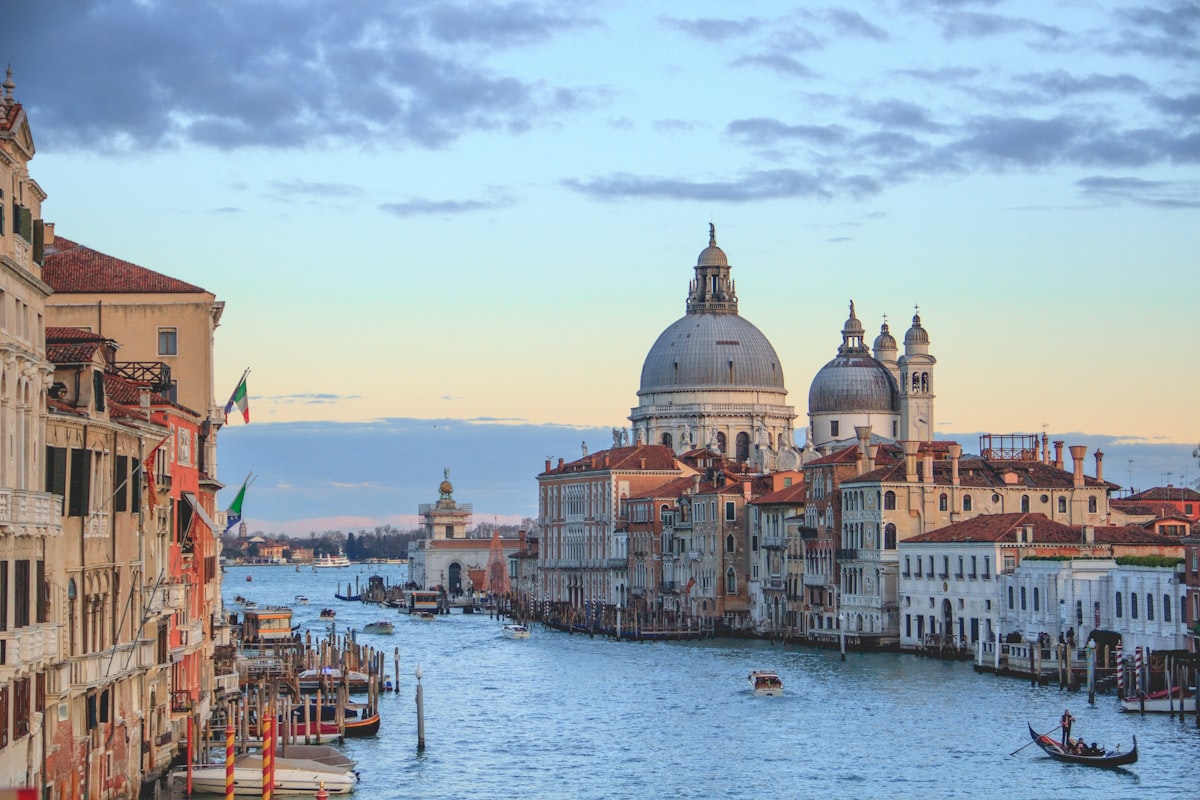
The Venice Biennale has always been a distorting mirror of its time. In 1993, Achille Bonito Oliva’s edition consecrated the return of painting after a decade of conceptualism. In 2015, Okwui Enwezor’s, another African curator gone too soon, opened the doors to artists from the continent with All the World’s Futures. In 2026, Koyo Kouoh completes a movement that Enwezor had set in motion. She no longer asks artists from the Global South to “participate” in a Western conversation. She changes the register of the conversation itself.
One hundred and eleven artists. From 9 May to 22 November 2026. Seven months to hear what is being said in a minor key, in the low frequencies of contemporary art. Seven months to find out whether the art world is capable of listening in any way other than through the clamour of auctions and society openings.
Koyo Kouoh will not be there. But her title already resonates like a score that can no longer be ignored. In Minor Keys. You do not need to be in a major key to be essential. You only need to be true.