There is a moment, in every working session, when I know everything is about to be decided. It is not when I prepare the canvas. Not when I mix the ink or check the consistency of the acrylic. It is just before. That second when the brush is loaded, my arm is raised, my whole body knows what it is going to do but nothing has been done yet. The last instant of reversibility. After that, it is something else. After that, it is painting.
India Ink, or Learning the Absolute
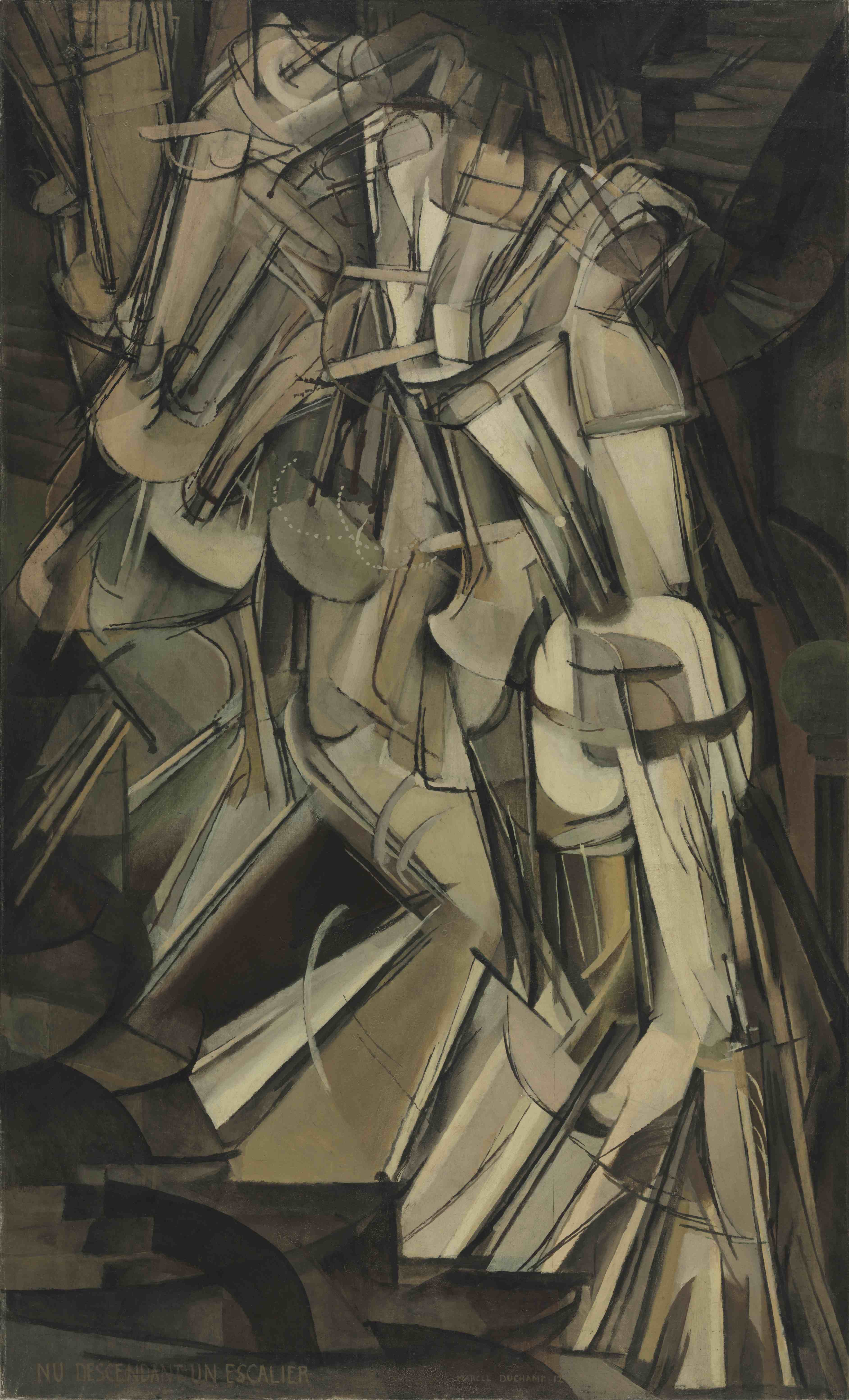
I began with India ink. Not out of aesthetic preference — out of necessity. I did not yet know what I was searching for, but I knew obscurely that I needed to put myself in danger. India ink does not forgive. It penetrates the paper the instant it touches it, as explored in Duchamp at MoMA.. There is no layer of white you can lay over it, no scraping possible, no solvent that could undo what has been done. The stroke is there. It will always be there. It carries within it all the clumsiness or all the rightness of the instant in which it was born.
That intransigence terrified me at first. I filled entire boxes with failed sheets — gestures too timid, strokes that wavered, forms that tried to please. India ink reveals hesitation the way a seismograph reveals an earthquake. There is no way to cheat. No way to go back over a curve to round it, to revisit an angle to soften it. Each sheet is a verdict.
That was exactly what I needed.
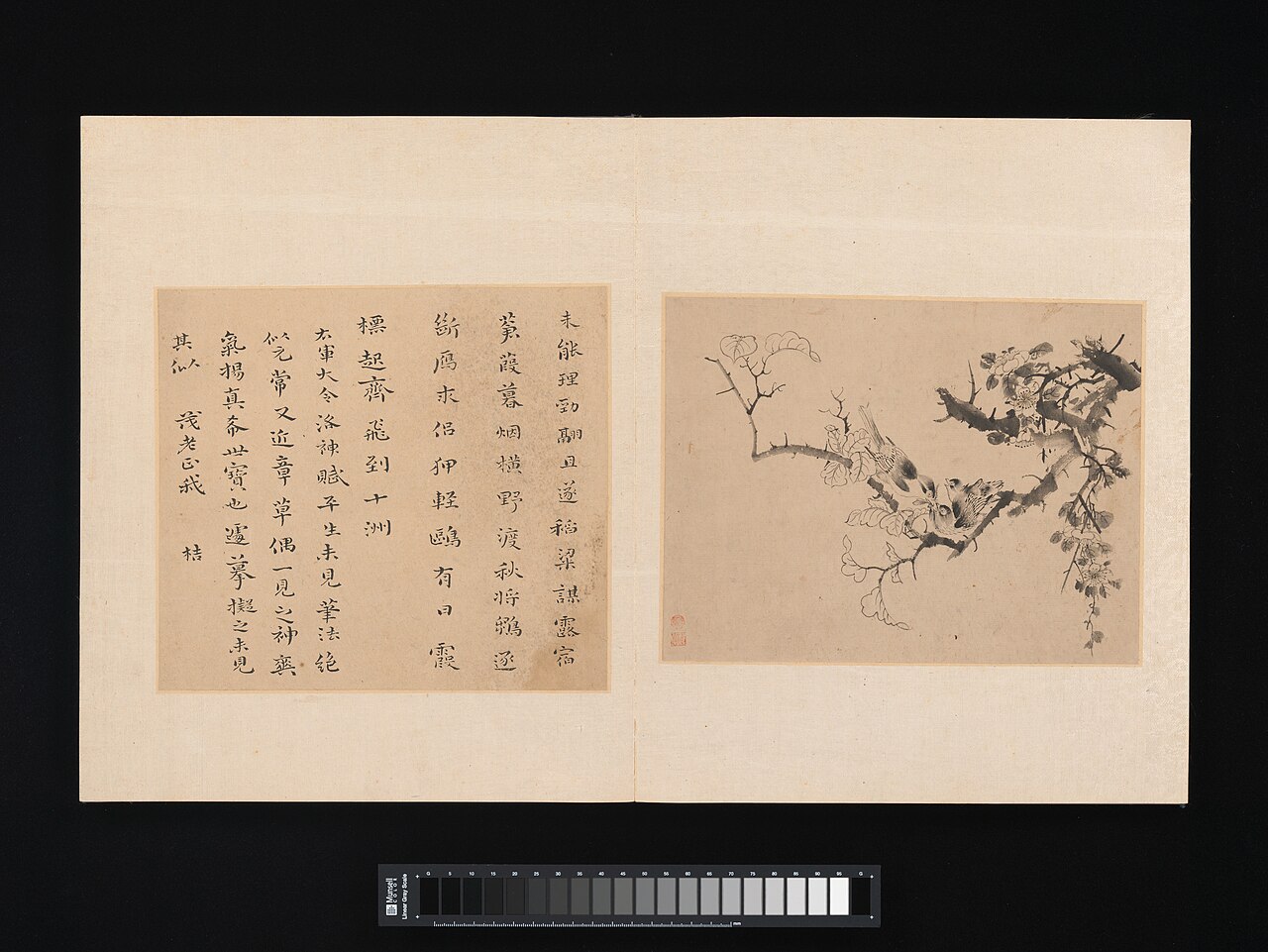
The Japanese calligraphic tradition has known this discipline for centuries. The master calligrapher spends hours preparing the ink, finding the right fluidity, attuning breath to the rhythm of gesture. Then the stroke. One stroke. Sometimes only one, as explored in painting beyond photography.. And that stroke contains everything: preparation, concentration, breath, intention, and also accident, the unforeseen, what the hand does when the mind lets go. The Japanese call it fudezukai — the way the brush behaves. It is not a technique. It is a relationship.
It took me a long time to understand that India ink does not ask for mastery. It asks for surrender. Not the surrender of vigilance, but the surrender of the will to control. You must accept that the stroke will have its own life, that the ink will do as it pleases with the fibre of the paper, that the humidity of the air, the temperature of the room, the speed of the gesture will create effects you have not programmed. To work in India ink is to learn to collaborate with everything that escapes you.
Hans Hartung, Pierre Soulages: The Lineage of Gesture
I did not turn to Soulages or Hartung out of admiration — I found them because I was searching for someone who understood what I was living through in the studio. Hartung, above all. His canvases of the 1950s, those sheaves of black strokes hurled onto pale grounds with an energy that seems to come from the entire body, not just the wrist. Hartung painted with branches, brooms, tools fashioned for the occasion. He sought speed. He sought the moment when the gesture outruns thought, when the body takes over from the brain, when something happens that no longer belongs to the will.
Soulages is another matter. Soulages inhabits slowness. His blacks — that “outrenoir” he turned into a philosophy — are built layer by layer, ridge by ridge, with a builder’s patience. But the logic is the same: every pass of the scraper across the wet surface is irreversible. The material sets, the light inscribes itself in a certain way, and there is no going back. Soulages worked the surface the way a ploughman works the earth: each furrow is final. You can carve others, but you cannot erase the one already there.
What struck me most about these two painters is their relationship to time. Hartung worked in seconds — blazing gestures, controlled explosions. Soulages worked in hours — long sessions, meditative, almost ritualistic. But in both cases, irreversibility was the very condition of creation. Not an obstacle. Not a constraint to overcome. The condition. The one that makes the gesture alive, that gives it weight, that ensures every stroke matters because it cannot be undone.
The Shift to Acrylic: Same Philosophy, Different Matter
When I left paper for canvas, when I moved from India ink to acrylic, I could have changed my method. Acrylic, technically, is more forgiving. You can cover over. You can layer opaque coats. You can, if you wish, erase everything and start from scratch. Many painters use this property of acrylic. It is a generous medium that tolerates repentance.
I do not use it that way.
My work in acrylic obeys exactly the same logic as my work in ink: one gesture, one mark, no going back. I never cover over. I never correct. If a stroke is laid down and it does not match what I had imagined, too bad — or all the better. That stroke holds a truth my imagination had not foreseen. To respect it is to respect the process. To correct it would be to lie.
This choice is not dogma. It is a matter of coherence between what I believe about painting and what I do in the studio. I believe painting is an act, not a result. I believe the finished canvas is merely the trace of an event that took place — a body in motion, a breath, a series of decisions made in the urgency of the gesture. If I go back and correct after the fact, I am not correcting the painting — I am betraying the event. I am turning a living act into a finished product. And finished products do not interest me.
Black and White as Ascesis
Working in black and white adds another layer of irreversibility. When you have the entire chromatic range at your disposal, you can compensate for a clumsy gesture with a play of colours, distract the eye with a seductive harmony, drown the error in the richness of the palette. In black and white, there is nowhere to hide. Every value, every contrast, every transition from black to white is laid bare. The gesture is legible as a sentence: you see the speed, the pressure, the angle, the hesitation if there was any.
That is why I chose black and white. Not because it is beautiful — though it is, with an austere beauty that touches me deeply. But because it is honest. Because the reduction to two poles — light and its absence — demands a precision of gesture that tolerates no blur. Each stroke must carry its own necessity. It will not be saved by colour.
The Vertical Format: The Body Standing
My canvases are vertical. Sixty by ninety centimetres, most often. This format is not a decorative choice. It is bound to the body. A vertical format is one that enters into dialogue with the standing posture. It assumes the painter is standing before the canvas, that the gesture descends or rises along the surface, that the arm works along the axis of gravity. A horizontal format invites landscape, contemplation, the resting eye. A vertical format demands tension. There is something of the tree in it, the column, the human being standing upright.
Painting vertically on a relatively modest format — 60x90 is not monumental — requires a particular concentration. The space is restricted. Every square centimetre counts. You cannot afford broad, vague gestures that lose themselves in the expanse of the canvas. Every movement must be precise, measured, necessary. It is an additional discipline that rejoins that of India ink: constraint as ally.
Irreversibility as Ethics
What I am trying to say — what I am trying to live in the studio, day after day — is that irreversibility is not a flaw of the creative process. It is its condition of truth. Retouching software, Ctrl+Z, stackable layers, fifty successive versions of the same file have created the illusion that creation can be a reversible process, that you can always go back, that nothing is ever final. But this illusion carries a cost: it empties the gesture of its charge. If everything can be undone, nothing weighs. If everything can be corrected, nothing is at risk.
Painting — painting as I practise it, at least — does not operate in that space. It operates in real time, in the instant that will not return, in the black of the ink sinking into the fibre and the white of the canvas letting itself be pierced by the acrylic. Every session is a unique event. Every canvas bears the traces of a moment that existed and will exist no more.
It is this charge that gets me out of bed in the morning and into the studio. Not the idea of producing a beautiful object. Not the desire to fill the walls of a gallery. But the urge to live that moment once more: the loaded brush, the raised arm, the held breath, and then the gesture. The gesture that cannot be taken back. The gesture that brings something into being that was not there before, and will never exist again in quite the same way.
That is what painting has always known how to do. Make time visible. One stroke at a time.