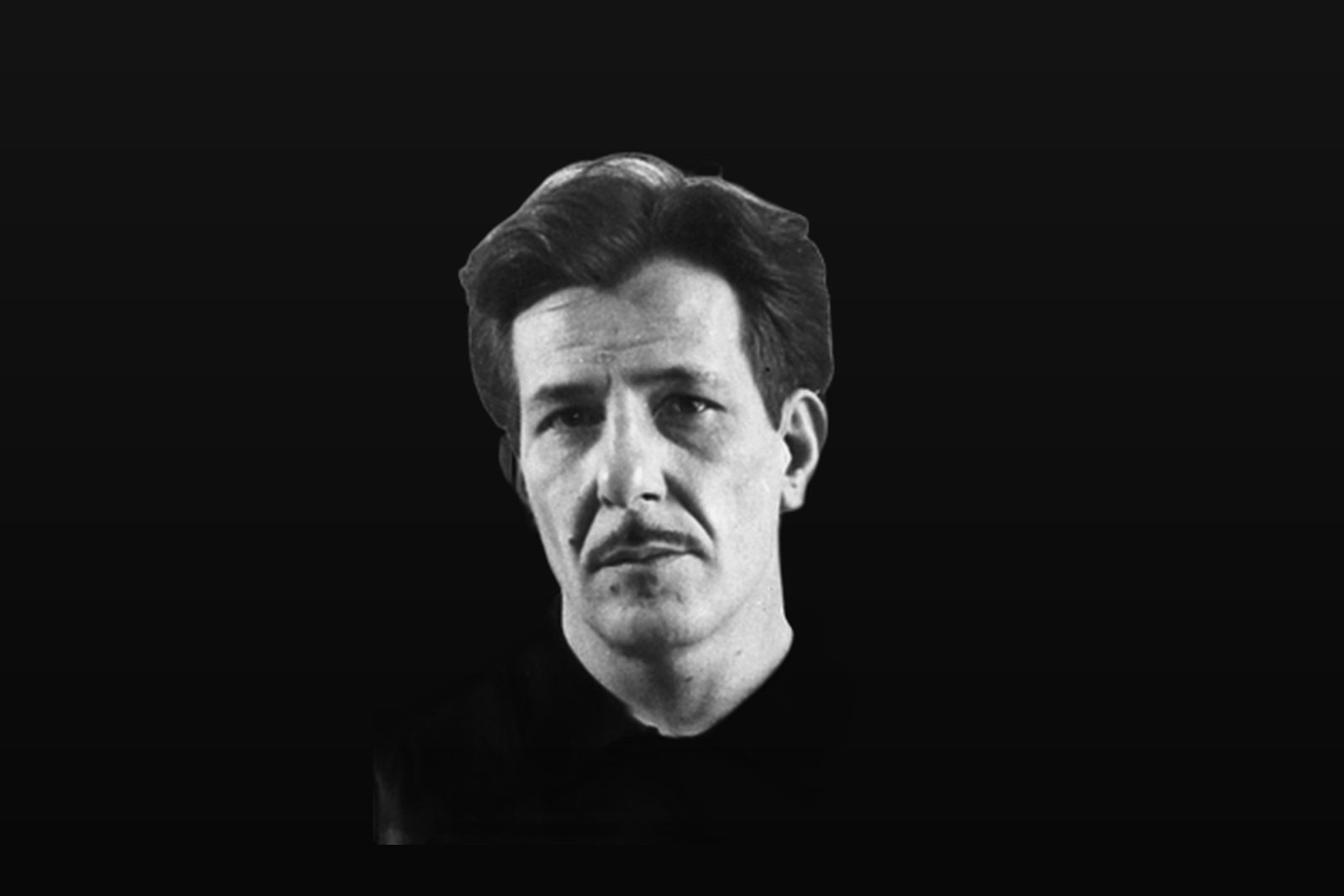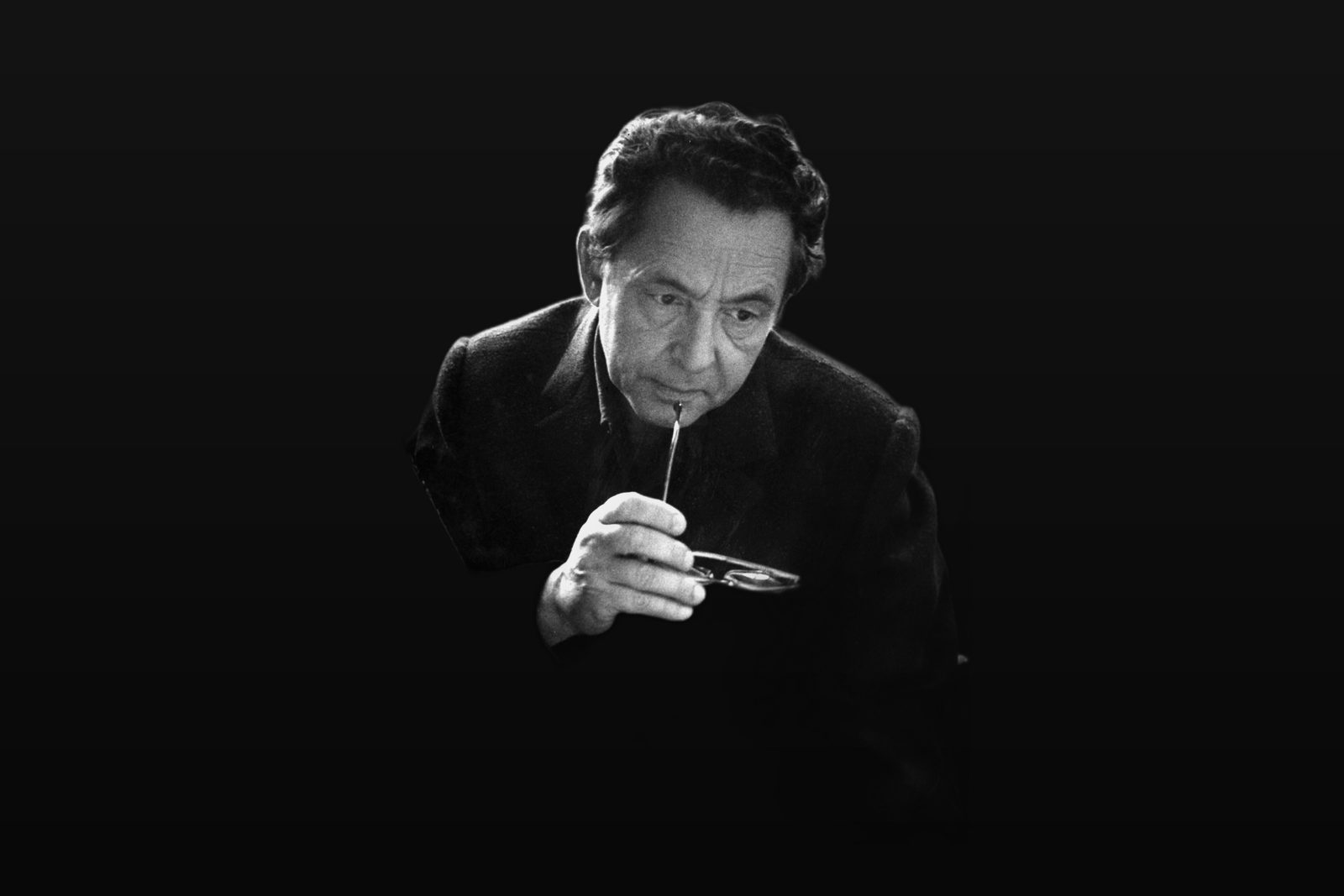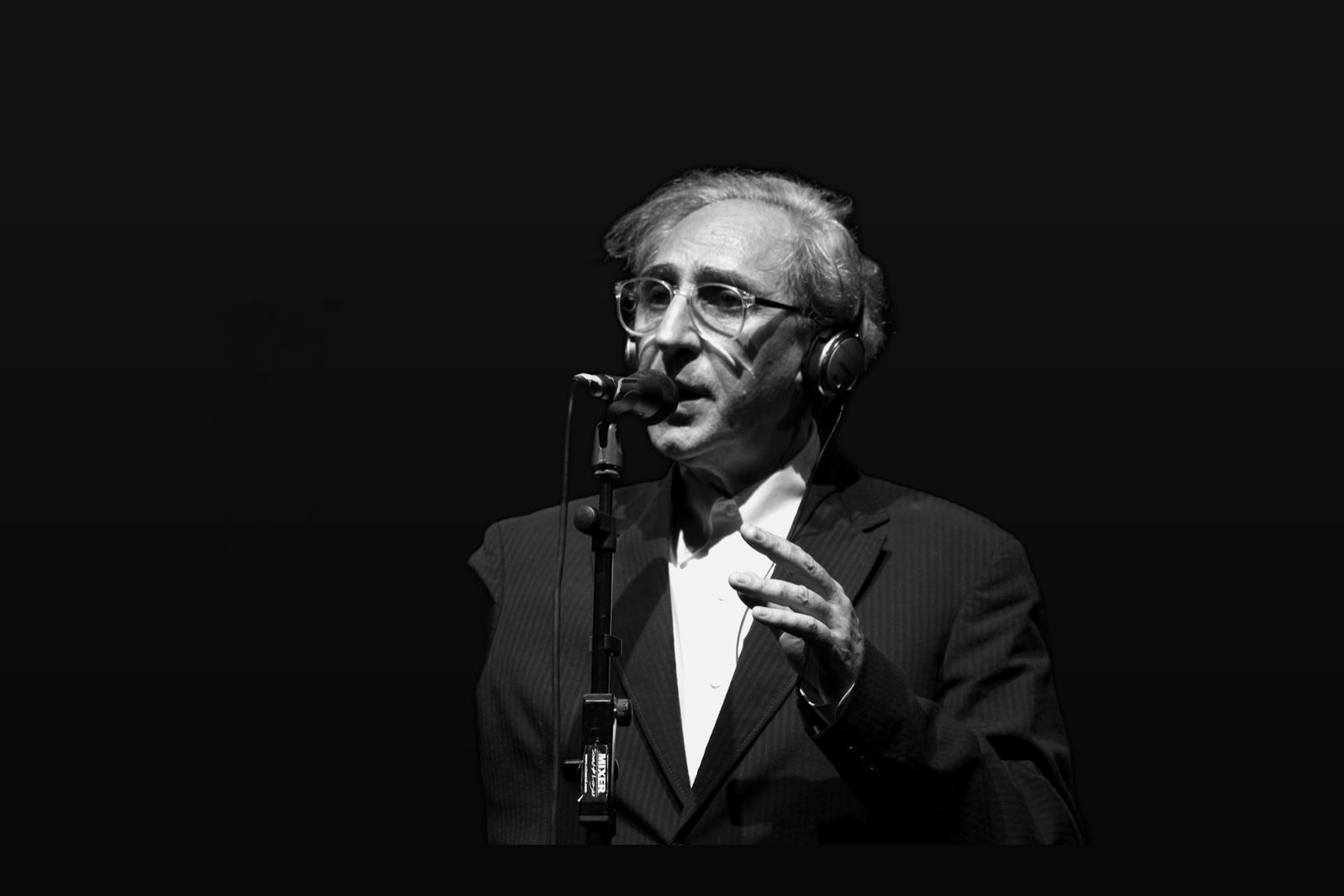
There are artists who force us to rethink boundaries. Franco Battiato was one of them, navigating between worlds with that sovereign nonchalance characteristic of great creators. Rome’s MAXXI now dedicates an exhibition to him that reveals what many didn’t know: behind the visionary musician was hiding an equally radical painter.
The exhibition Franco Battiato. Through the Eternal Light unfolds across three floors an immersive journey where canvases dialogue with compositions. A revelation for those who thought they knew the author of La voce del padrone. Because Battiato painted. Not as a dilettante, but with that same mystical rigor that permeated his albums.
The Eye That Hears, the Hand That Composes
From the entrance, one fact becomes clear. Battiato’s canvases bear the trace of his musical ear. His pictorial compositions follow rhythms, counterpoints, chromatic harmonies that recall his sonic research. Here, a vermillion red pulses like a basso continuo. There, ochres and umbers layer in visual syncopation.
This synesthesia is no accident. The Sicilian artist had studied philosophy before turning to music, then to painting. For him, these disciplines formed only one: that of expressing the ineffable. His canvases from the 1980s, exhibited in the first room, testify to this quest. Geometric abstractions where pure color dialogues with silence, they evoke Rothko as much as the electronic experiments of Pollution.
The MAXXI’s hanging highlights this troubling correspondence between pictorial gesture and musical gesture. Each canvas seems to resonate with an inner melody, each chromatic chord calls for a harmonic progression. The dialogue between materials finds here a new dimension: that of intermediality.
The Studio as Sonic Laboratory
The reconstruction of Battiato’s studio, on the second floor, reveals the scope of this transversal practice. Easel and synthesizers coexist in scholarly disorder. Scribbled scores and charcoal sketches mingle on work tables. The space testifies to a nomadic creation, moving from one medium to another according to the moment’s inspiration.
This fascinating hybridization questions our own relationship to artistic disciplines. When the hand holding the brush has learned to play piano, it retains the memory of scales. The gestures that escape conscious control carry within them this double training, this double sensitivity.
The artist’s notebooks, presented under glass cases, reveal musical notations mixed with sketches, philosophical reflections alongside color notes. This indistinction of practices reminds us that art, fundamentally, knows only one territory: that of expressive necessity.
Color as Melody
The works from the 1990s mark a turning point. Battiato gradually abandons geometric abstraction to explore a free figuration, almost naive. His portraits, his Sicilian landscapes, his still lifes all bear that particular chromatic signature: color chords that seem directly transposed from his musical compositions.
A self-portrait from 1995 strikes with its intensity. The face emerges from an ochre-red background, eyes rimmed with cobalt blue. This restricted palette, these frank contrasts immediately evoke the aesthetics of ink wash: the same quest for purity, the same refusal of anecdotal detail. The irreversible gesture finds its justification in the urgency of expression.
For this is precisely what it’s about: expressing the inexpressible through the most direct means. Battiato painted as he composed, from inner necessity. His canvases don’t seek to seduce but to testify to a vision of the world, to a spirituality in perpetual motion.
The Eternal Quest
The exhibition’s final room gathers works from 2000-2010, a period when Battiato deepened his spiritual quest. His canvases fill with esoteric symbols, references to Gurdjieff, to Sufi traditions. Painting becomes a support for meditation, an attempt to fix the invisible on canvas.
These late works reveal an artist who has achieved a personal synthesis between East and West, between tradition and modernity. Their deliberately simple, almost primitive execution masks a conceptual sophistication that recalls his most accomplished albums. Same economy of means, same expressive efficiency.
The exhibition closes with a sound installation where Battiato’s voices resonate in the exhibition space. This final device underscores the obvious: music and painting never ceased to dialogue in the Sicilian artist’s work. They formed the two faces of the same mountain, two languages to speak the unspeakable.
Art as Unified Territory
Leaving the MAXXI, one certainty remains. Franco Battiato was neither musician nor painter: he was an artist, in the purest sense of the term. His pictorial practice doesn’t constitute a side note to his musical work, but truly its necessary complement. It reveals the profound coherence of a creative approach that refused compartmentalization.
This lesson resonates particularly today, when boundaries between arts are blurring. Battiato had understood this intuitively: authentic art never limits itself to a single medium. It borrows all paths necessary to its expression, all languages capable of translating its vision of the world.
The MAXXI exhibition reminds us of this essential truth: behind every great musical work may hide a painter, behind every canvas may resonate a melody. True art knows only one boundary: that which separates the authentic from the artificial. Franco Battiato had chosen his side long ago.