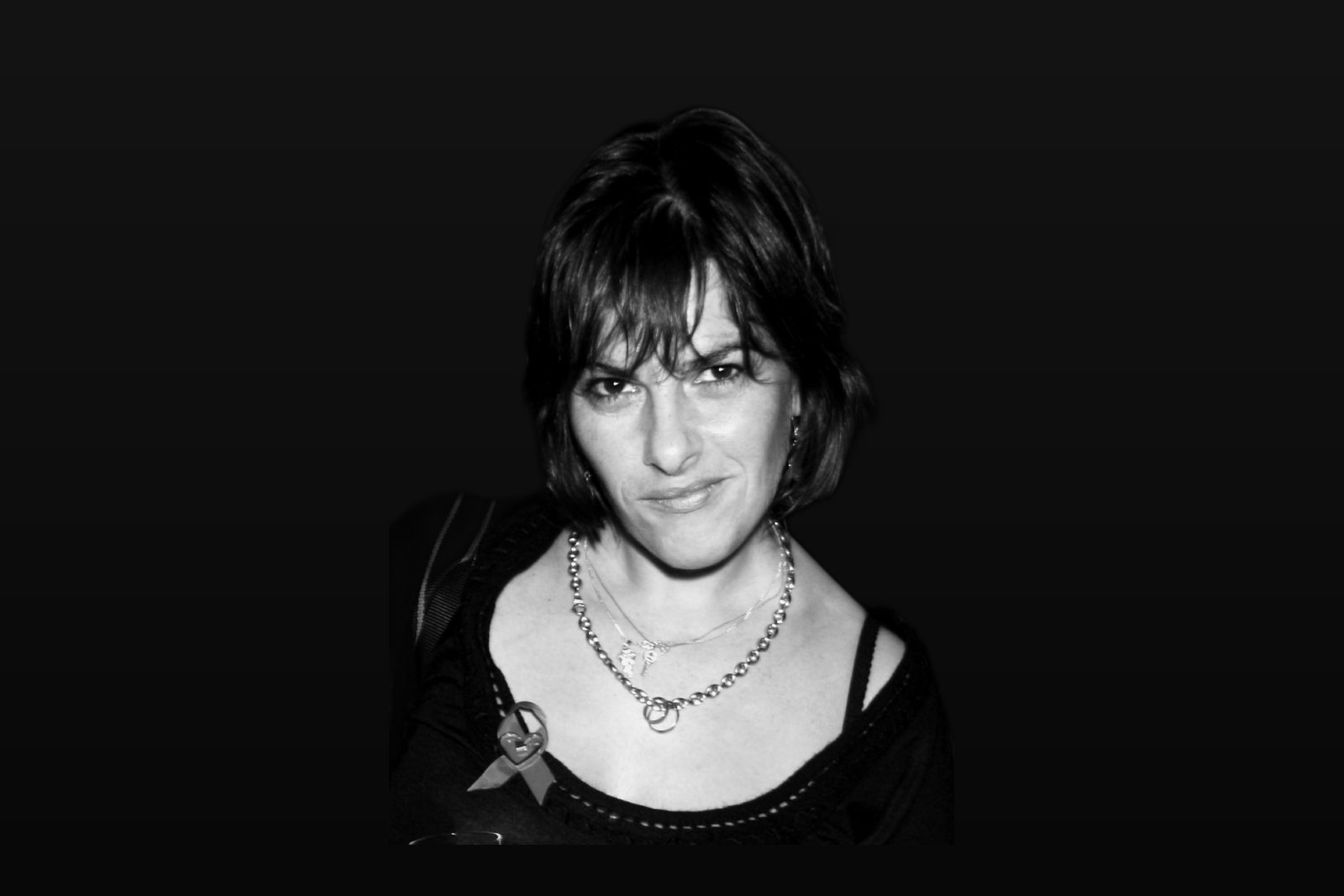
Some artists keep their secrets. And then there’s Tracey Emin. For forty years, she has laid bare her wounds, transformed her sleepless nights into manifestos, made banners from her crumpled sheets. The retrospective dedicated to her at Tate Modern until September resembles a complete stripping down, one hundred works that tell without embellishment a woman’s life in all its brutal complexity.
This is not exhibitionism. It’s something else.
Confession as Artistic Territory
The exhibition opens with early paintings from the 1980s, when Emin was still studying at the Royal College of Art. Already, this urgency to speak the intimate, this inability to separate art from existence. The titles strike like slaps: Why I Never Became a Dancer (1995), Everyone I Have Ever Slept With 1963-1995 (1995). Confession becomes artistic territory, where others seek abstraction or conceptualization.
One must see these first acrylic paintings, sometimes clumsy, where words mingle with drips. Emin paints as she writes, in urgency, without regret. This dimension of the irreversible gesture finds particular resonance when we think of contemporary Chinese ink practices, where each stroke definitively commits the work.
My Bed or the Art of Radical Confession
At the center of the exhibition sits My Bed (1998), this installation that caused scandal at the Turner Prize in 1999. An unmade bed, stained sheets, used condoms, empty bottles. Four days of romantic depression transformed into a major artwork. Visitors circle around it like around an accident, fascinated and uncomfortable.
This is perhaps where Tracey Emin’s strength lies: in this capacity to transform the intimate into universal without ever falling into voyeurism. The bed becomes metaphor for all beds, particular pain reveals common pain. Art as exorcism, as collective therapy.
The installation strangely dialogues with those moments when accident becomes fertile in creation. With Emin, nothing is calculated, everything proceeds from a vital necessity to say, to show, to share the weight of existence.
Evolution Toward Technical Mastery
The following rooms reveal a surprising transformation. Recent bronzes, ink drawings from the 2010s, testify to growing technical mastery. Emin has learned to sculpt, to engrave, to handle the brush with precision. But this new virtuosity never betrays the original urgency.
Her monochrome works in black ink on paper, presented in one of the final rooms, reveal an artist who has found in chromatic stripping a new language of emotion. Radical black and white, this absence of color that says everything, recalls those contemporary practices where restriction becomes creative freedom.
Vulnerability as Political Force
What strikes in this retrospective is the political dimension of this assumed vulnerability. In an era where self-image is built in permanent performance, where social networks transform each existence into sanitized spectacle, Tracey Emin persists in showing the backstage. Her Everyone I Have Ever Slept With or her Why I Never Became a Dancer are acts of resistance to the normalization of affects.
The British artist, member of the Young British Artists of the 1990s, opened a path that many have taken since, often degrading it. But in her work, never complacency. The wound shows itself to heal, not to seduce.
The Legacy of Radical Authenticity
Forty years after her beginnings, Tracey Emin has imposed an artistic language where autobiography becomes universal art form. This retrospective at Tate Modern demonstrates it with troubling evidence: there can exist a beauty of vulnerability, an aesthetic of confession, a poetics of assumed fragility.
Her latest works, these bronzes where she casts her own words into metal, transform the ephemeral of emotion into sculptural permanence. “I loved you more than I loved myself,” reads one of them. Confession becomes monument, the intimate joins the eternal.
Leaving this dense and moving exhibition, one understands that Tracey Emin never sought to make things pretty. She sought to make them true. In a world of artifice, it’s perhaps the most revolutionary of artistic gestures.