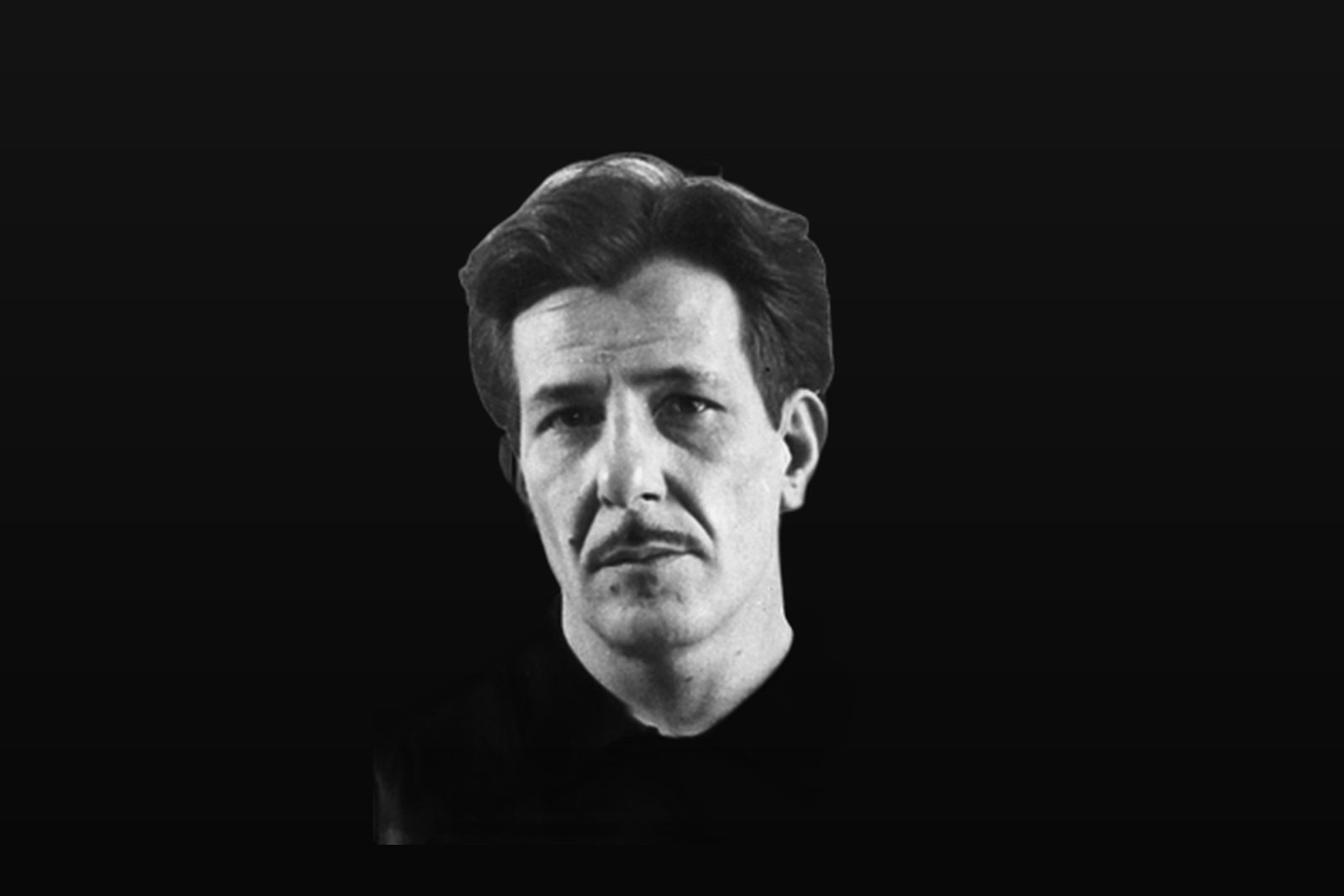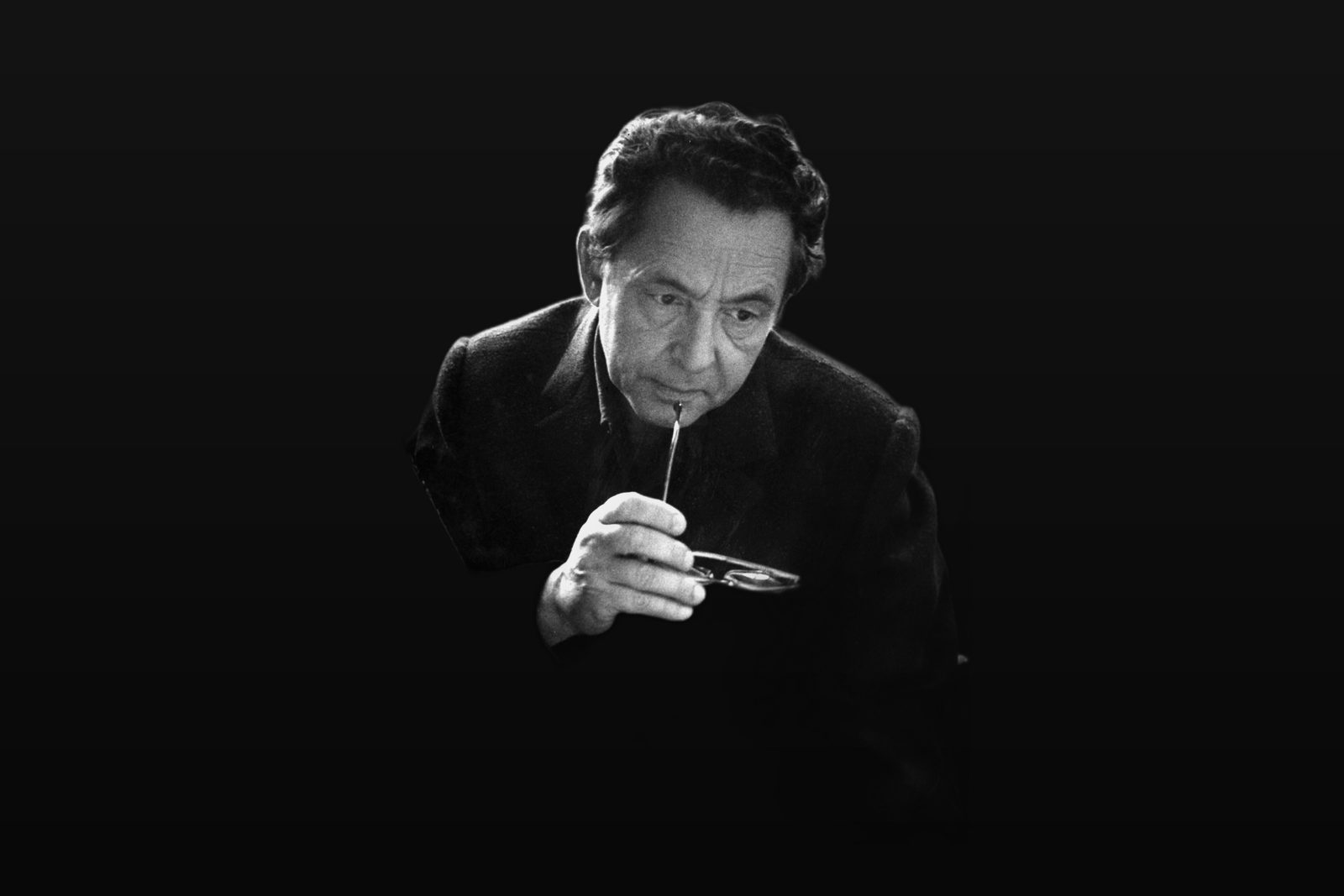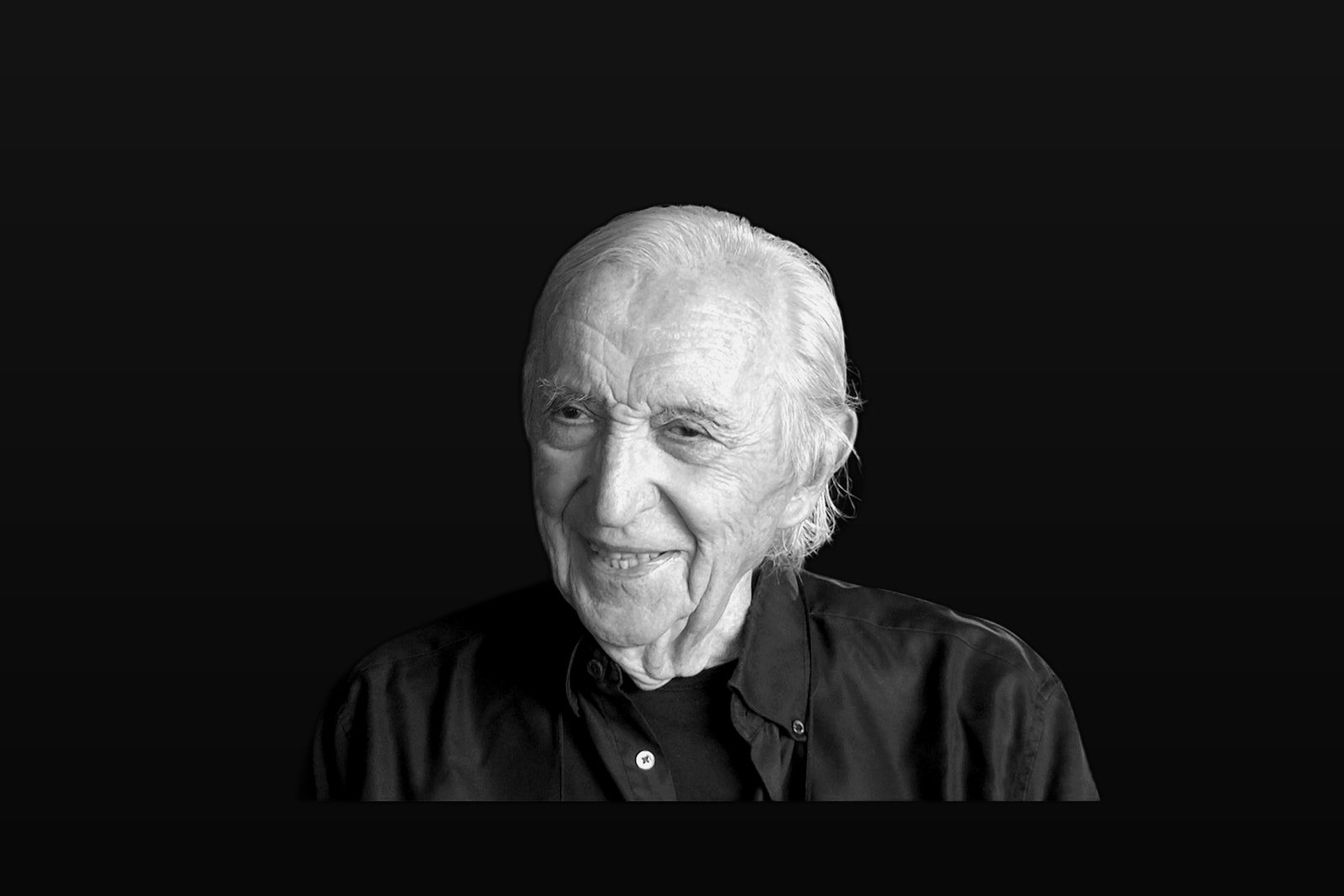
Any serious abstract practice is built in dialogue with a few tutelary works. For Coralie J Schmitt, who works exclusively in black and white in ink, acrylic and photography, the name Pierre Soulages (1919-2022) returns as a silent matrix. Not as a model to reproduce, but as the demonstration that a single tone, treated with rigour, can sustain a lifetime of work.
Outrenoir as programme
On 19 January 1979, Soulages painted a large entirely black canvas. The surface seemed closed. He then began to scratch, scrape and hollow it. What he discovered turned him away definitively from any return to colour: light is born from black itself, reflected by the furrows of brush and tool. He named this discovery outrenoir.
The word is not incidental. Soulages did not say “black monochrome”, he said “outre-noir” — beyond black. Black ceases to be an absence, an end, a privation of light. It becomes an active matter that produces light by its own structure. This inversion is radical: it displaces the entire Western tradition that, since the Renaissance, has treated black as the shadow of white.
What Schmitt inherits
In Schmitt’s work, the inheritance is not mimetic. Her corpus contains no entirely black scratched canvas, no direct citation of the 1979 gesture. What passes is more profound: a certain way of treating black as matter, not as a sign.
In the Encres de Chine, black is never used to “say” something. It illustrates nothing, represents nothing, symbolises nothing. It is the plastic decision. This restraint, this refusal of narrative expressivity, is exactly what Soulages spent sixty years defending. When asked what his paintings represented, he tirelessly replied: “They do not represent, they present.”
The same ethics traverses Schmitt’s numbered Encres de Chine. No title, no anecdote, no narrative. Just the trace. The presence of black as a plastic event.
The discipline of the few
Soulages is also a lesson in duration. He held for more than forty years to a single constraint: black monochrome painting. This persistence is rare in recent art history, where the pressure to renew oneself, vary mediums, surprise critics, pushes most artists to diversify their production.
This discipline of the few also structures Schmitt’s work. Three mediums (ink, acrylic, photography), a single palette (black and white), a single ethics (measured audacity, a formula that returns in her manifesto). No pop, no colour, no figuration. This constancy is not a limitation: it is what makes the work identifiable, legible, situated.
What outrenoir does not explain
The divergences must also be named. Schmitt is not Soulages, and it would be easy, through lazy reading, to reduce her work to a French inheritance of black. At least three differences deserve to be marked.
Active white. Where Soulages progressively eliminated white from his canvases from 1979 onwards, Schmitt makes it a central actor. In the new acrylics of 2026, white ceases to be a background and becomes a mass. This inversion brings Schmitt closer to Robert Ryman as much as to Soulages.
The calligraphic gesture. The Encres de Chine carry a Far Eastern origin (speed of stroke, structuring void, single inscription) that Soulages, anchored in a Western history of Romanesque art and medieval light, never explicitly claimed.
Photography as a third language. Soulages did not practise photography as an autonomous medium. Schmitt makes it one of her three pillars, on equal footing with painting. This versatility changes the very nature of the global work.
The light that remains
What remains, after these named divergences, is the same founding intuition: black is not the opposite of light, it is its condition. Schmitt’s Encres de Chine, seen in natural studio light, demonstrate this in turn. The black stroke captures the light, sends it back, fragments it. The white paper bears its trace. Between the two, something is written that holds neither to black nor to white, but to the tension they maintain together.
This tension is what Soulages called outrenoir, and it is what Schmitt continues to seek, in her own way, in each of her pieces.
Sources and further reading
- Pierre Encrevé, Soulages. L’œuvre complet. Peintures, 4 volumes, Le Seuil, 1994-2015
- Bernard Ceysson, Soulages. Noir Lumière, Hazan, 2009
- Pierre Soulages — Une rétrospective, Centre Pompidou, 2009-2010, exhibition catalogue
- Soulages au Louvre, Hazan, 2019, catalogue of the exhibition at the Musée du Louvre