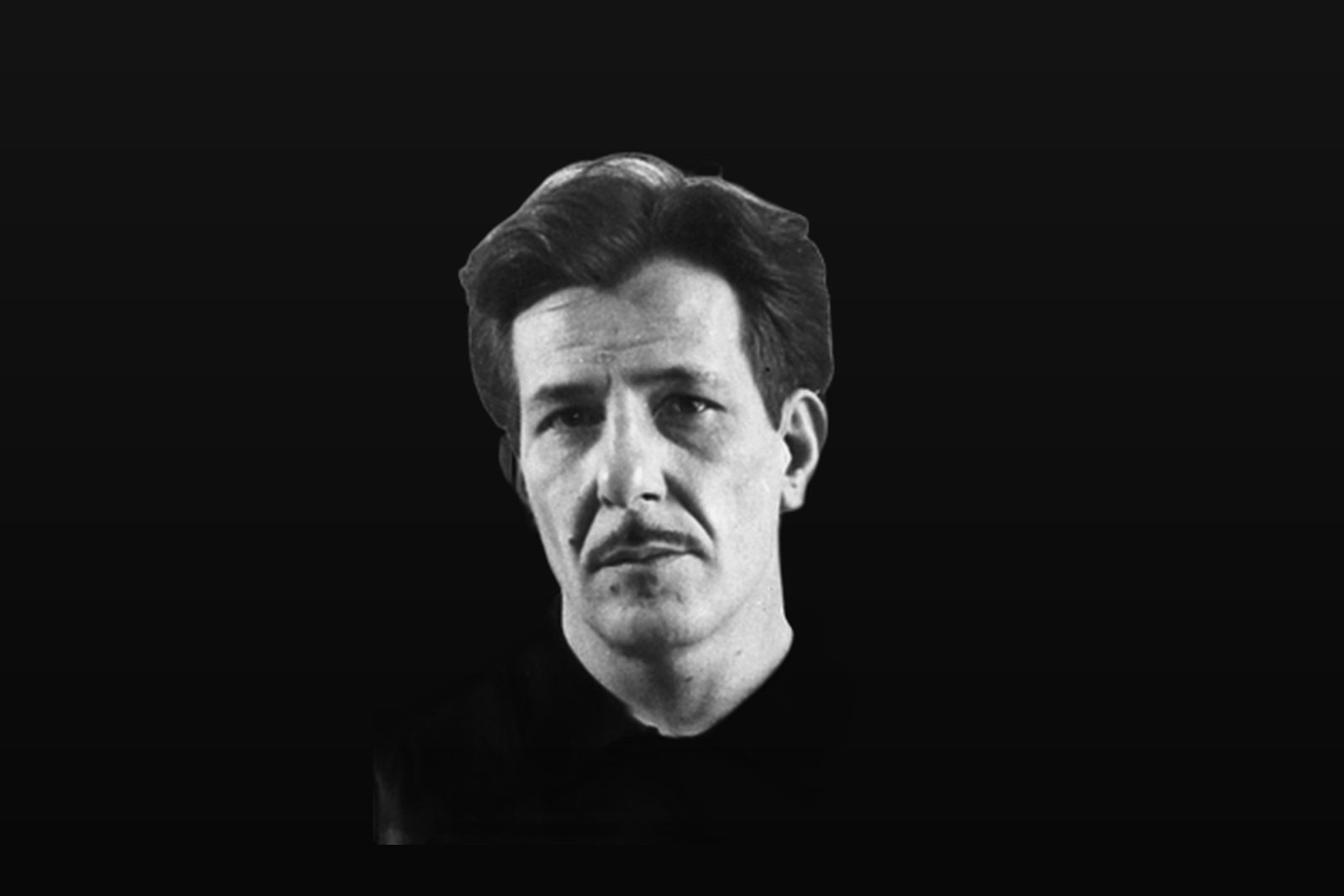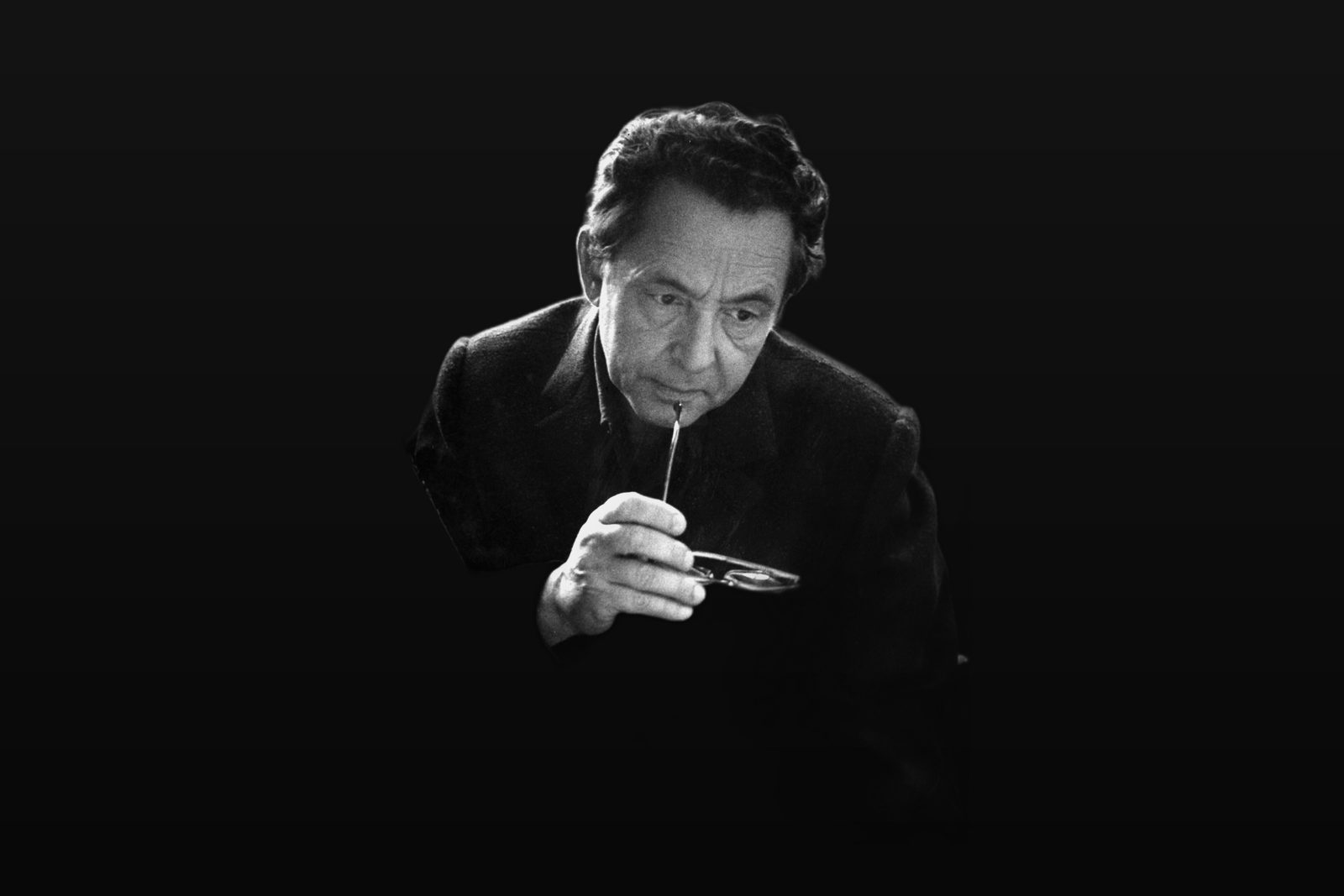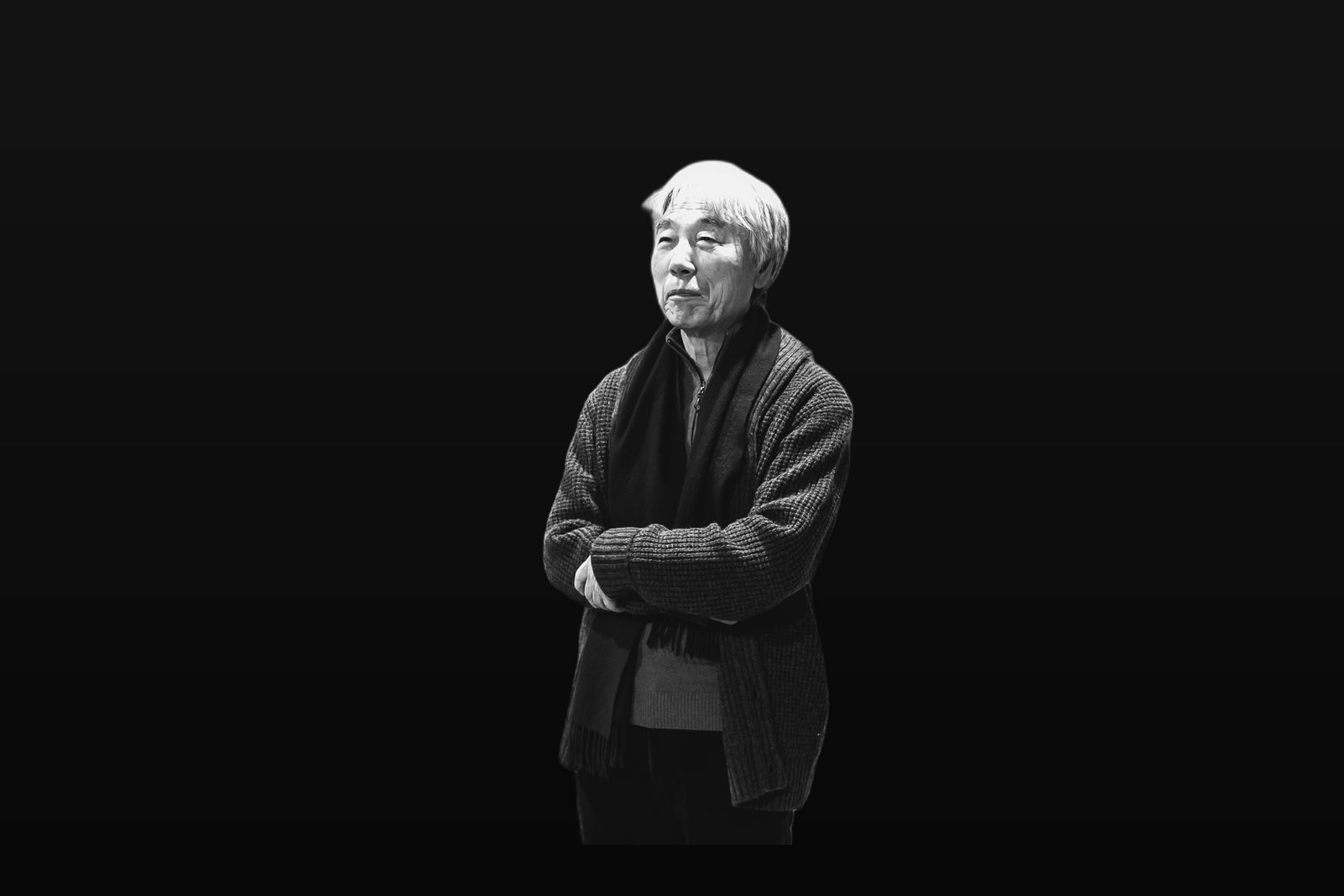
There are silences that make more noise than all the screams. In the refined spaces of the Fondation Louis Vuitton, Lee Ufan orchestrates a symphony of void that resonates with the force of revelation. The Korean artist, a major figure of the Mono-ha movement, transforms each room into a meditation on what is not there. And it is precisely in this absence that everything unfolds.
The Mono-ha revolution: when less becomes more
Lee Ufan did not arrive alone at the summit of contemporary Asian art. He carries with him an entire movement born in 1960s Japan, the Mono-ha (School of Things), which revolutionized the approach to art by questioning the relationship between raw materials and the space surrounding them. Where the West still sought to transform, to sublimate, to add, Mono-ha proposed to reveal, to present, to let be.
This philosophy finds its most refined expression in the Parisian exhibition. Lee Ufan’s canvases, these white spaces barely touched by a few brushstrokes, are not unfinished works. They are lessons in absolute mastery, demonstrations of what can be accomplished by a gesture that knows when to stop at the right moment. A fascinating paradox: it takes a lifetime of learning to dare not to finish.
Faced with these works, it’s impossible not to think of Chinese ink and the irreversible gesture. This same tension between action and restraint, this acute awareness that each stroke matters because it cannot be erased. Lee Ufan pushes this logic to its extreme: he paints knowing that the true subject of his work is everything he chooses not to paint.
The architecture of silence in Gehry’s space
Frank Gehry’s curves dialogue with troubling obviousness with Lee Ufan’s art. As if the American’s deconstructivist architecture had found its perfect antithesis in the Korean’s contemplative minimalism. This encounter produces unexpected effects: the building’s complex volumes create echoes, resonances, shadow plays that amplify the poetry of void dear to Lee Ufan.
In the great nave, a stone placed on a steel plate is enough to transform the entire space. It’s no longer an exhibition hall, it’s a cosmos in reduction where each element finds its place by necessity, not by decoration. The lesson is masterful: minimal art does not consist of removing elements until achieving bareness, but of placing each element with such precision that it reveals the very essence of space.
Visitors circle around this installation as around a mystery. Some search for hidden meaning, others for symbolism. They miss the obvious: the work is their own movement, their own questioning, this way that art has of transforming our view of the world. Lee Ufan doesn’t fabricate objects, he sculpts experiences.
Painting as breathing exercise
The exhibited canvases reveal an approach to painting that borders on martial art. Each brushstroke seems to result from long mental preparation, absolute concentration, a gesture that engages the entire being. Lee Ufan speaks of “breathing” to describe his method: inhaling deeply, then letting the brush trace its path on the canvas, in a controlled exhalation.
This philosophy of gesture resonates strangely with the urgency of gesture that characterizes contemporary painting. But where others seek immediate expression of raw emotion, Lee Ufan cultivates patience, slowness, this form of gentle violence that consists of imposing silence in a world of noise.
His “Correspondance” and “Dialogue” are not arbitrary titles. They designate a conception of painting as conversation: between artist and canvas, between color and white, between full and void. A conversation where silences count as much as words, where unpainted spaces become as expressive as worked areas.
Western influence revisited
Lee Ufan studied philosophy at Nihon University in Tokyo before immersing himself in Western art during his stays in Europe in the 1970s. This double formation allows him a unique synthesis: he borrows from American minimal art its formal radicality, but injects it with an Eastern spirituality that Western minimalism tended to evacuate.
The exhibition highlights this synthesis through particularly subtle hanging. Recent works sit alongside historical pieces from the 1970s, revealing remarkable coherence over more than fifty years of creation. Lee Ufan has not evolved, he has deepened. Each new work seems to be the infinitesimal variation of a unique theme: how to make the invisible visible, how to give form to void.
This constancy in research questions our own contemporary artistic practices, often marked by the search for novelty at all costs. Lee Ufan demonstrates that there can be a form of radicality in repetition, modernity in constancy, revolution in meditation.
The lesson of void for contemporary art
Leaving the exhibition, an evidence imposes itself: Lee Ufan offers a precious alternative to the visual overload of our era. In a world saturated with images, stimuli, solicitations, his art functions as a filter, a purifier, a reminder of the essential.
This approach directly questions contemporary creative practices. Must we always do more, go further, shock more? Lee Ufan’s example suggests another path: that of intensification through reduction, amplification through subtraction. A particularly precious lesson for those working with irreversible mediums, where each gesture counts and error cannot be erased.
The Fondation Louis Vuitton offers with this exhibition much more than a retrospective: it proposes a masterclass of contemporary creation. Lee Ufan demonstrates that the most powerful art is not necessarily that which fills space, but that which gives it meaning. In this era of excess, here is a lesson that resonates well beyond the gallery walls alone.