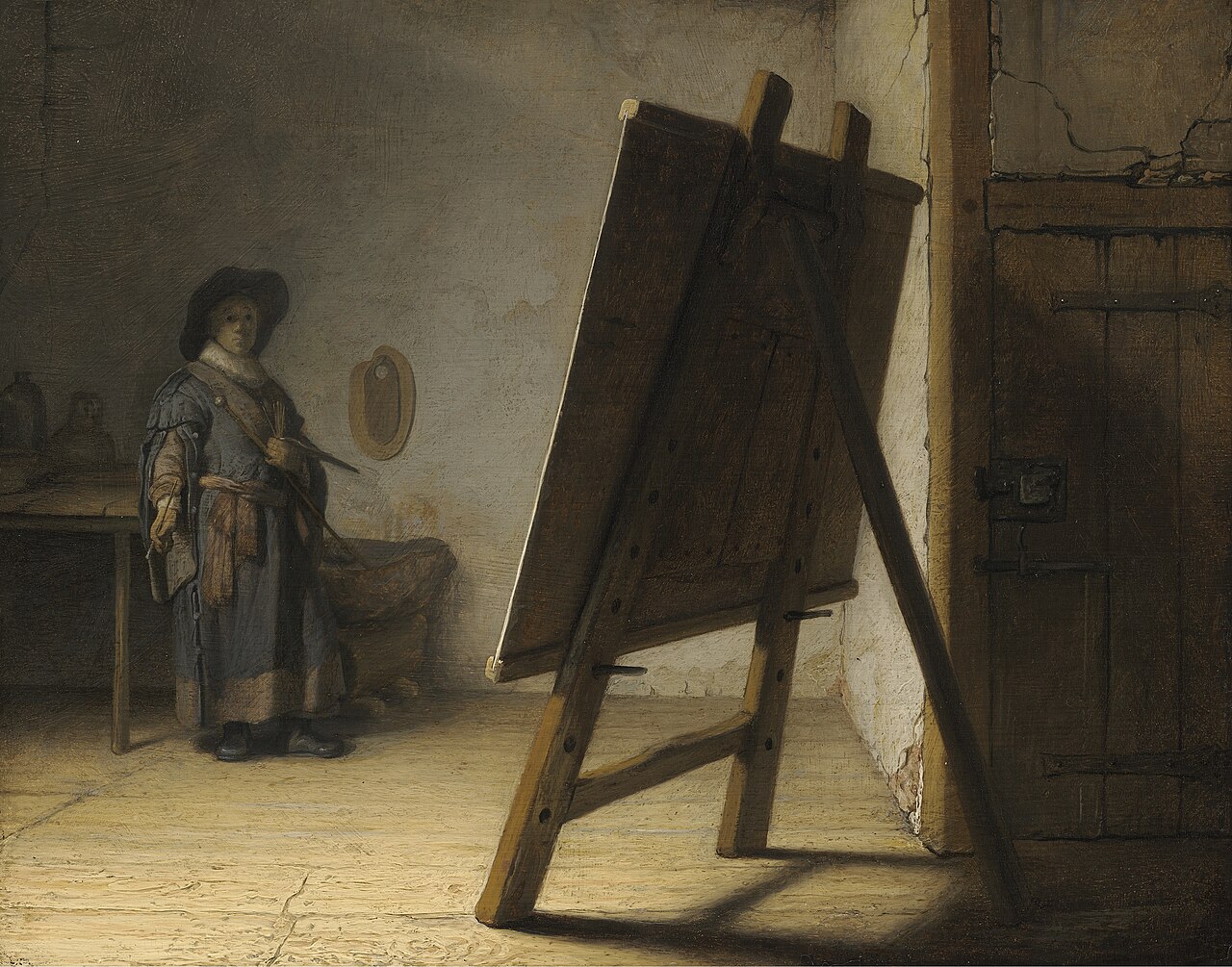
There is something deeply liberating about a line that stops mid-course. Tonight, facing my barely begun canvas, I observe these first gestures of India ink that seem to already contain everything the work could become. And I wonder if completion isn’t sometimes the enemy of truth.
The Sketch as Pure Revelation
Leonardo da Vinci already knew this: his notebooks overflow with half-drawn faces, impossible machines sketched with a confident stroke, anatomies suspended between observation and reverie. In his preparatory studies for The Battle of Anghiari, each pencil stroke carries an urgency that the final version, lost today, might never have matched. The sketch captures the moment of discovery, that instant when the idea takes shape before technique has had time to constrain it.
There is in the unfinished a brutal sincerity that completion can blunt. When I place my ink-loaded brush on paper, this first contact already reveals the essence of what will be born. The gesture is irreversible, as I have explored elsewhere in these pages, but it also carries within it its own completeness. The art of the unfinished is accepting that this first truth might suffice.
Cézanne and the Eternal Quest
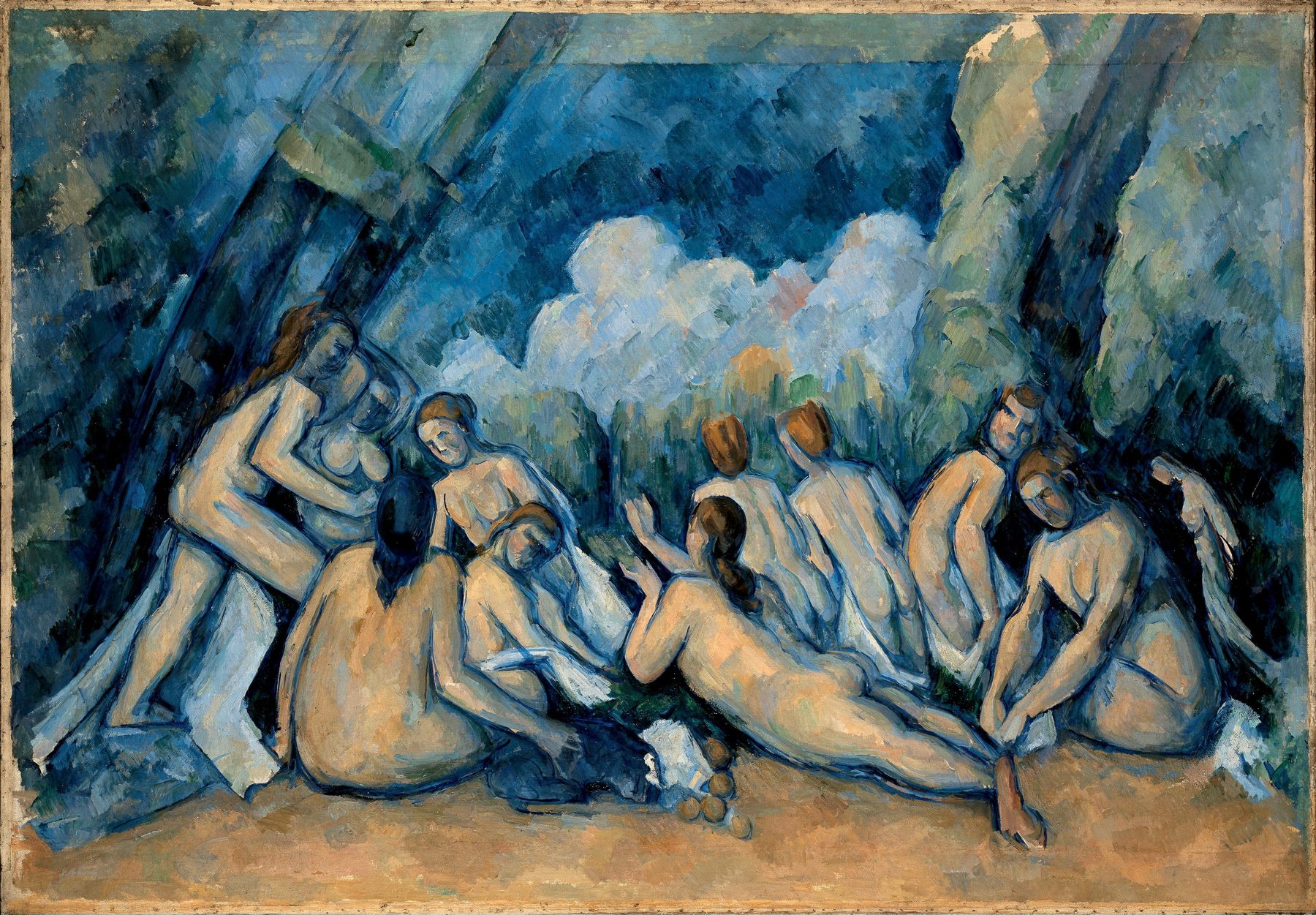
Paul Cézanne elevated incompletion to an aesthetic principle. His final canvases, The Large Bathers notably, leave the bare canvas visible in places, as if the artist had chosen to preserve the space of possibility. These virgin zones are not lacks, they are breaths, invitations for the gaze to complete what the brush deliberately left open.
In my own work, I have learned to recognize these moments when continuing would be betrayal. India ink does not forgive, but it also teaches this wisdom of stopping. Sometimes a form is born by itself, perfect in its incompletion, and any addition would only weaken it. Cézanne spent months before his motifs, not from slowness, but because he sought that fragile balance between too little and too much.
Perfection as Creative Prison
The obsession with perfect finish can become a straitjacket. How many works have died under the weight of their own accomplishment? Michelangelo himself left certain of his sculptures in a state of voluntary incompletion, those famous non-finiti where bodies emerge from marble as if they were still struggling to be born.
This aesthetic of imperfection resonates particularly with contemporary practice. In a world saturated with polished images and flawless digital productions, art rediscovers its necessity precisely in what escapes total control. My vertical 60x90 cm canvases often bear these happy accidents, these ink drips that reveal more truth about the gesture than any premeditated intention.
The Unfinished as Opening to Dialogue
The unfinished work transforms the viewer into an accomplice. It invites them to participate, to imagine what could be, to inhabit the space of possibility. This is perhaps its most troubling strength: it refuses the status of finished object to become a living process.
Alberto Giacometti erased and reworked his drawings endlessly, not from dissatisfaction but from faithfulness to that moving truth he sought to capture. Each version was simultaneously accomplished and preparatory, definitive and provisional. This apparent contradiction actually reveals the profound nature of the creative act: it is never truly finished, simply interrupted.
In the studio, come evening, when artificial light cuts forms differently, I rediscover my own canvases. Some, which I thought complete, suddenly reveal their essential incompletion. Others, left in sketch form for months, reveal themselves complete in their primary evidence.
Imperfection as Signature of the Living
Perhaps we must seek in Japanese art this wisdom of accepted imperfection. The concept of wabi-sabi celebrates the beauty of what bears traces of time and use. But beyond this aesthetic, there is a philosophy: recognizing that absolute perfection belongs to the domain of death, while imperfection signs the presence of the living.
My India ink gestures carry this signature of the human. Each stroke reveals the pressure of my hand, the hesitation of an instant, the emotion of the moment. This assumed imperfection paradoxically becomes the work’s perfection: it says something irreplaceable about the instant of its creation.
The art of the unfinished is not a renunciation, it is a radical choice. That of trusting the primary force of gesture, of preferring raw emotion to technical skill, of letting the work breathe rather than suffocating it under virtuosity. In this acceptance of imperfection, art perhaps rediscovers its most ancient function: not to imitate reality, but to reveal what, within it, escapes all perfect reproduction.