There are metamorphoses that can only be seen in hindsight, when the dust settles and the archives open. Lee Miller belongs to that category of artists whose work was revealed in absolute urgency, when History shattered aesthetic certainties. The exhibition dedicated to her at the Paris Museum of Modern Art until July doesn’t bother with smooth chronology. It shows a woman who crossed the 20th century like crossing a battlefield, camera at the ready.
From Poughkeepsie to surrealist studios
Lee Miller arrived in Paris in 1929 with the arrogance of her twenty-two years and a beauty that turned heads. A model for Vogue, muse to Man Ray whom she quickly became the equal of, she mastered solarization in just a few months, that technique which reverses tones and transforms reality into fantastic vision. The portraits she created then already revealed an obsession with metamorphoses. Her deconstructed self-portraits, her disturbing still lifes announced an artist who refused appearances.
Surrealism offered her a language, not a prison. Unlike the women-objects that the movement fantasized about, Miller developed a gaze that belonged to her. Her collaborations with Man Ray never involved submission. She invented, experimented, pushed photographic technique toward unexplored territories. When she left Paris in 1932, she took with her technical mastery and above all a certainty: art can speak the unspeakable, provided one accepts the violence of reality.
The eye at the heart of the storm
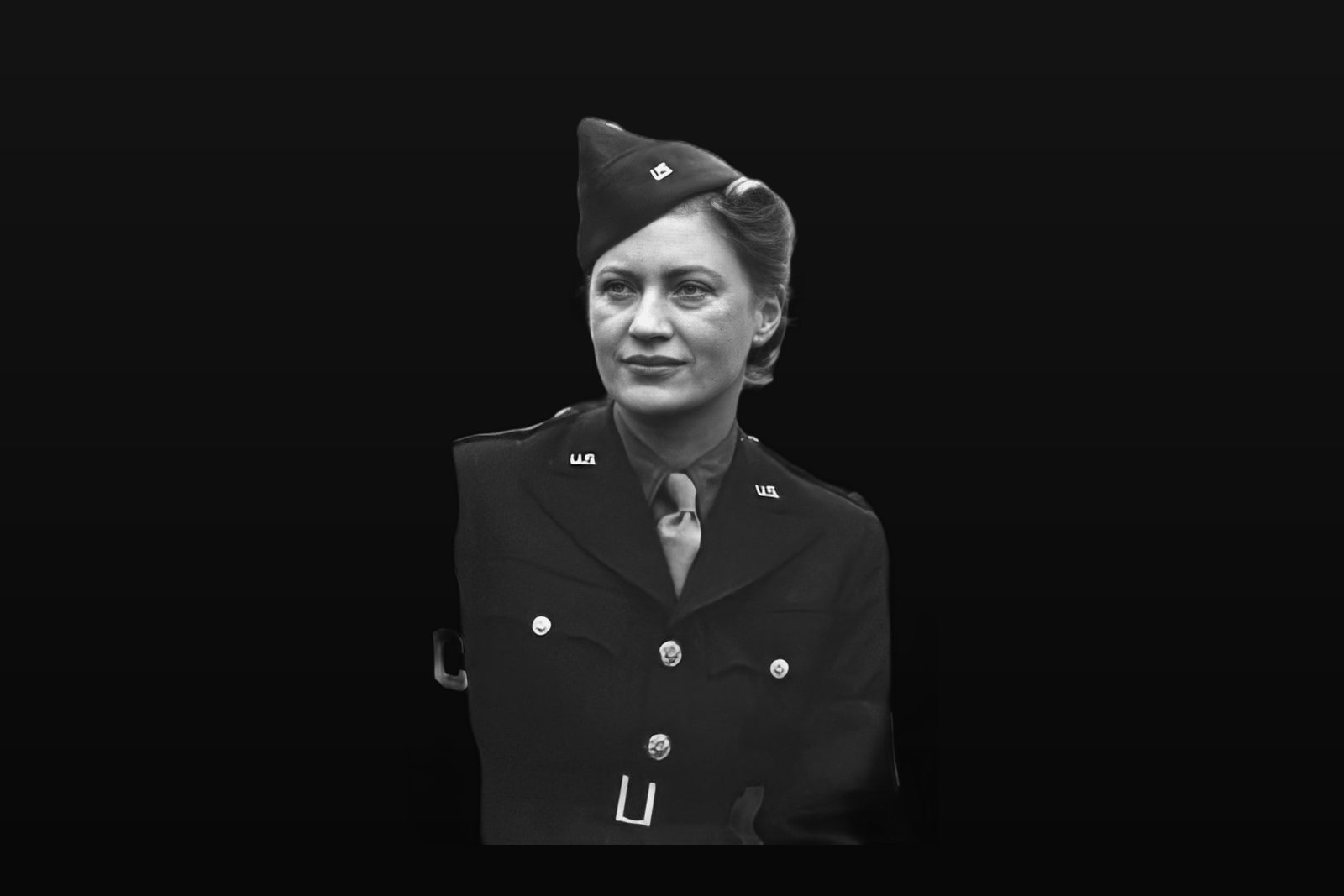
- Lee Miller was no longer the surrealist muse but Vogue’s correspondent on the European front. The contrast seemed absurd, this fashion magazine sending a former model to document Nazi horror. Yet it was precisely this collision between two worlds that gave strength to her work. Miller photographed war with an eye trained in Parisian avant-garde. She composed her images of bombings like still lifes, found formal beauty in destruction.
Her shots from the liberation camps marked a definitive break. At Buchenwald, at Dachau, Miller abandoned all aestheticism. Surrealist technique served raw testimony, without compromise. These images, long censored by Vogue, revealed an artist capable of transforming horror into historical document. Miller understood that certain realities demanded a frontal approach, without detour or regret, like those India ink strokes that forgive no hesitation.
Photography as an act of resistance
The MAM exhibition reveals a little-known aspect of Miller’s work: her ability to paint what cannot be photographed, paradoxically by photographing. Her war images transcend simple reportage to achieve a troubling artistic dimension. The framing, lighting, composition reveal an artist who refuses to separate aesthetics from ethics.
This tension runs through all her post-war work. Miller continued to photograph, but differently. The portraits of her artist friends, the English countryside landscapes bear the stigmata of what she had seen. A muted melancholy permeates her final series, as if beauty itself had become suspect. Miller then invented a photography of the after, which assumes the irreparable break between before and after the war.
The legacy of a mutant gaze
Lee Miller’s journey questions our artistic categories. How to classify a body of work that navigates between fashion, surrealism, photojournalism and historical testimony? The Parisian exhibition refuses these divisions and reveals the profound coherence of a gaze that adapted to circumstances without ever abdicating its singularity. Miller demonstrates that authentic art often springs from the collision between the intimate and History, when the artist accepts to be transformed under the pressure of events.
Her final years, marked by alcohol and depression, testify to the price paid for having looked the unnameable in the face. Miller died in 1977, leaving behind a scattered body of work that her son Anthony Penrose has since worked to have recognized. This belated recognition raises an essential question: how many women artists have disappeared in the shadow of their male contemporaries, their archives lost, their contribution minimized?
A lesson for contemporary art
Lee Miller’s work resonates particularly today, at a time when contemporary art questions its capacity to bear witness to the world. Miller reminds us that artistic engagement doesn’t necessarily involve explicit denunciation, but rather the quality of gaze brought to reality. Her approach to photography as plastic language as much as historical document opens fertile perspectives for today’s creators.
The MAM exhibition ultimately reveals an obvious truth: Lee Miller was not only an exceptional war photographer, but a complete artist who knew how to make her own metamorphosis the material of her art. From surrealist muse to witness of History, she invented an artistic practice capable of embracing all the contradictions of her era. A lesson in freedom that crosses decades, intact.