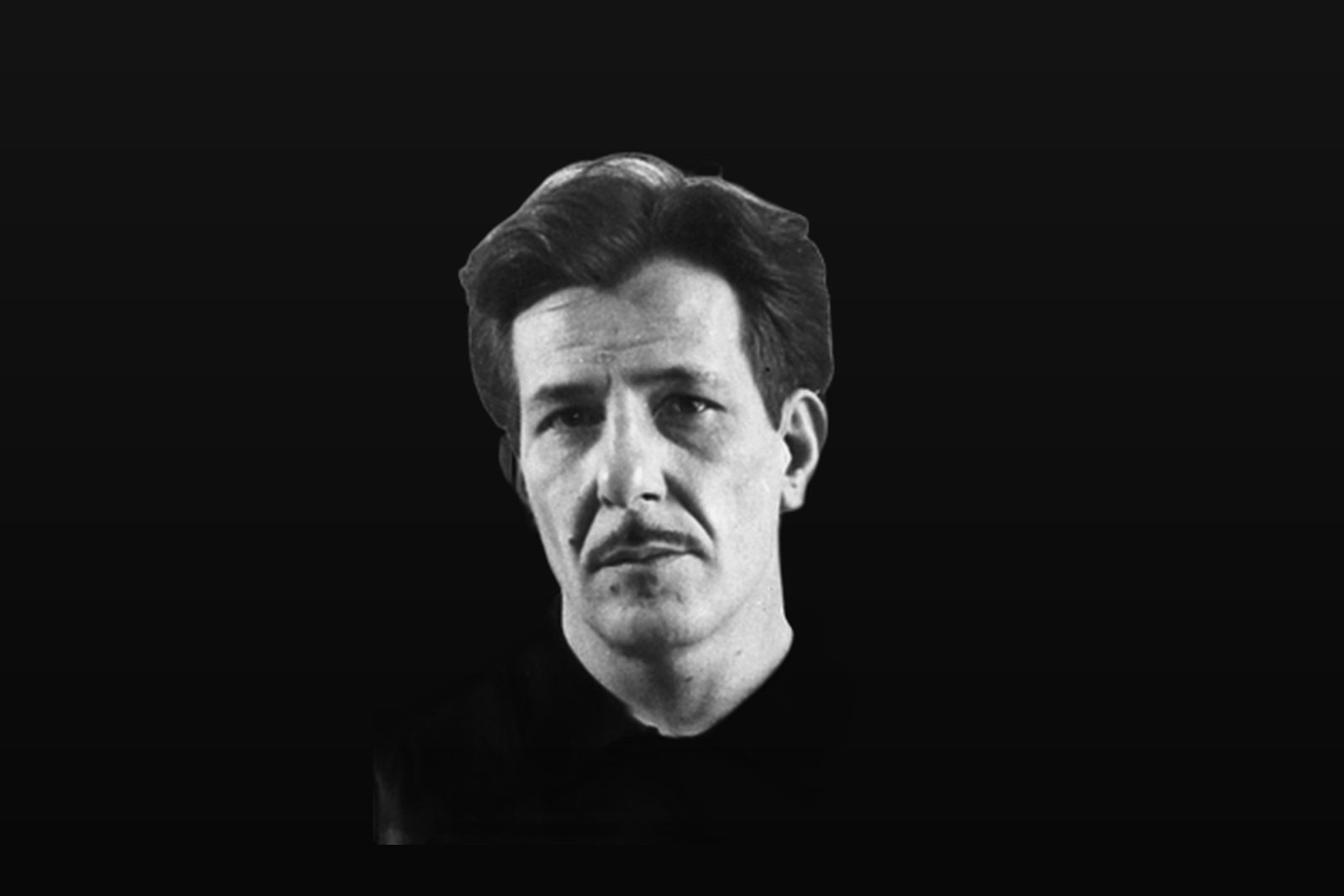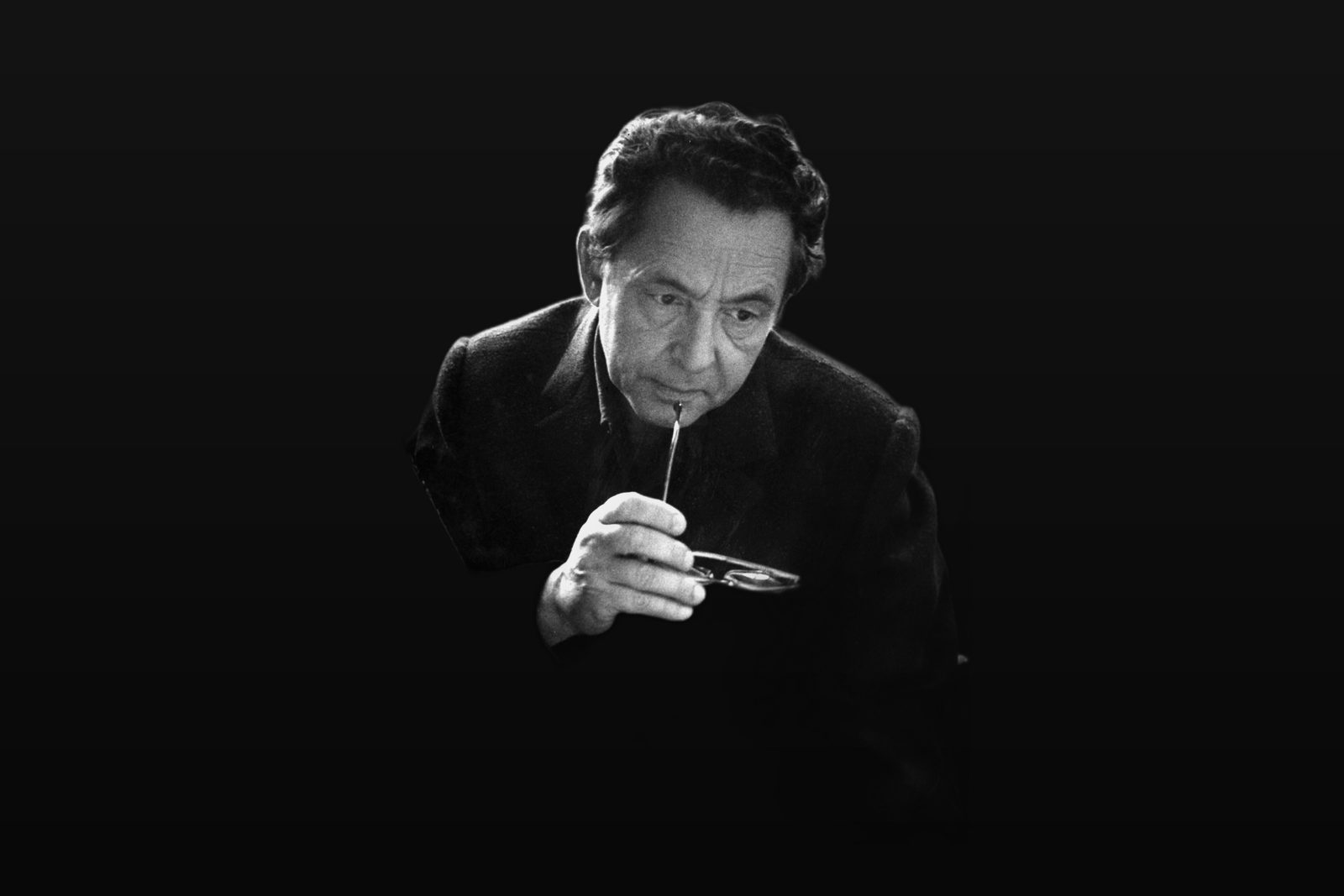
Gestural expressionism has two parallel histories, one American, the other European. In New York, Jackson Pollock, Willem de Kooning, Franz Kline. In Paris, Pierre Soulages, Georges Mathieu, Hans Hartung (1904-1989). These two families share an era (the 1940s-1960s), a conviction (that the gesture alone can sustain a work), and profound divergences in the way of practising that conviction. For Coralie J Schmitt, it is the European branch that best illuminates the new 2026 acrylic series, and in particular the work of Hartung.
The painter who prepared his paintings
Hartung’s biography is inseparable from his practice. Born in 1904 in Leipzig, trained in classical German painting, exiled to France in the 1930s, enlisted in the Foreign Legion during the Second World War (where he lost a leg), naturalised French in 1946. This story is traversed by a particular ethics: Hartung is one of those painters who prepare their paintings mentally before executing them, and who absolutely refuse the “pure gesture” associated with American action painting.
His T series (of the 1950s-1960s), apparently improvised, are in reality the outcome of a precise protocol: preparatory sketches, tests, calculations of proportion. The gesture that appears on the canvas has been thought through, anticipated, sometimes reproduced from earlier studies. This method radically distinguishes Hartung from Pollock, who on the contrary claimed the event of the studio as the sole law.
The contained ethics
This ethics of prepared gesturality is one of the most precious lessons Schmitt inherits from him. In the new 2026 acrylic series, several pieces show a gesture both ample and bounded. The stroke extends across the canvas with energy, but it stops at the right distance. The black mass occupies a precise zone, without overflowing or containing itself too much. This measure in the gesture is exactly what Hartung defended: neither gratuitous explosion, nor timid restraint. A gesture that knows where it is going.
This method demands a particular discipline. It supposes that one can think a painting before making it, without thereby removing its freshness of execution. It is a difficult balance, which few works reach. Hartung achieved it for fifty years. Schmitt attempts it in her way, and with her means, in more contained formats but with the same ethics of invisible preparation.
The grammar of scratches
Hartung is also the painter who, the first in Europe, made the scratch a major plastic event. In his T series and then in the large canvases of the 1960s-1970s, he developed a vocabulary of striations, streaks and slashes that structure the canvas by their presence alone. These marks are neither drawings, nor writings, nor stains. They are incisions, treated as events in the pictorial matter.
This vocabulary illuminates certain pieces of Schmitt’s acrylic corpus. La déchirure, by its very title, assumes a kinship with this aesthetics of the incision. The canvas is treated as a support to be cut, to be traversed, to be opened. This operation is not violent in the spectacular sense of the term. It is precise, disciplined, and that is what makes it effective.
The acknowledged divergences
At least two differences distinguish Schmitt’s practice from Hartung’s.
Colour. Hartung, despite his reputation as a painter of black, used colour extensively, notably in his last years. Blues, yellows, reds traverse the work. Schmitt, on the contrary, assumes an absolute discipline of black and white, without possible derogation. This difference is not minor: it corresponds to a different choice of plastic identity.
The scale of the works. Hartung practised large and very large formats, up to 5 metres in length in the 1970s-1980s. Schmitt remains, to date, in more intimate formats. This difference of scale changes the very nature of the dialogue with the viewer: where Hartung envelops, Schmitt confronts at eye level.
The lesson that remains
What remains, beyond these divergences, is the conviction that a gesture can be both energetic and disciplined. This idea is rare. Most painters choose a camp: either classical mastery, which planes down the energy, or unbridled expressionism, which sacrifices precision. Hartung held for five decades that the two were compatible. Schmitt extends this position in her own corpus, at her own rhythm, and with the same ethics of the discreet preparation that makes the gesture right.
Sources and further reading
- Hans Hartung, Autoportrait, Grasset, 1976
- Hans Hartung 1904-1989 : la fabrique du geste, Musée d’Art Moderne de Paris, 2019, exhibition catalogue
- Pierre Daix, Hans Hartung, Bordas, 1991
- Hartung 10 perspectives, Skira/Fondation Hartung-Bergman, 2006